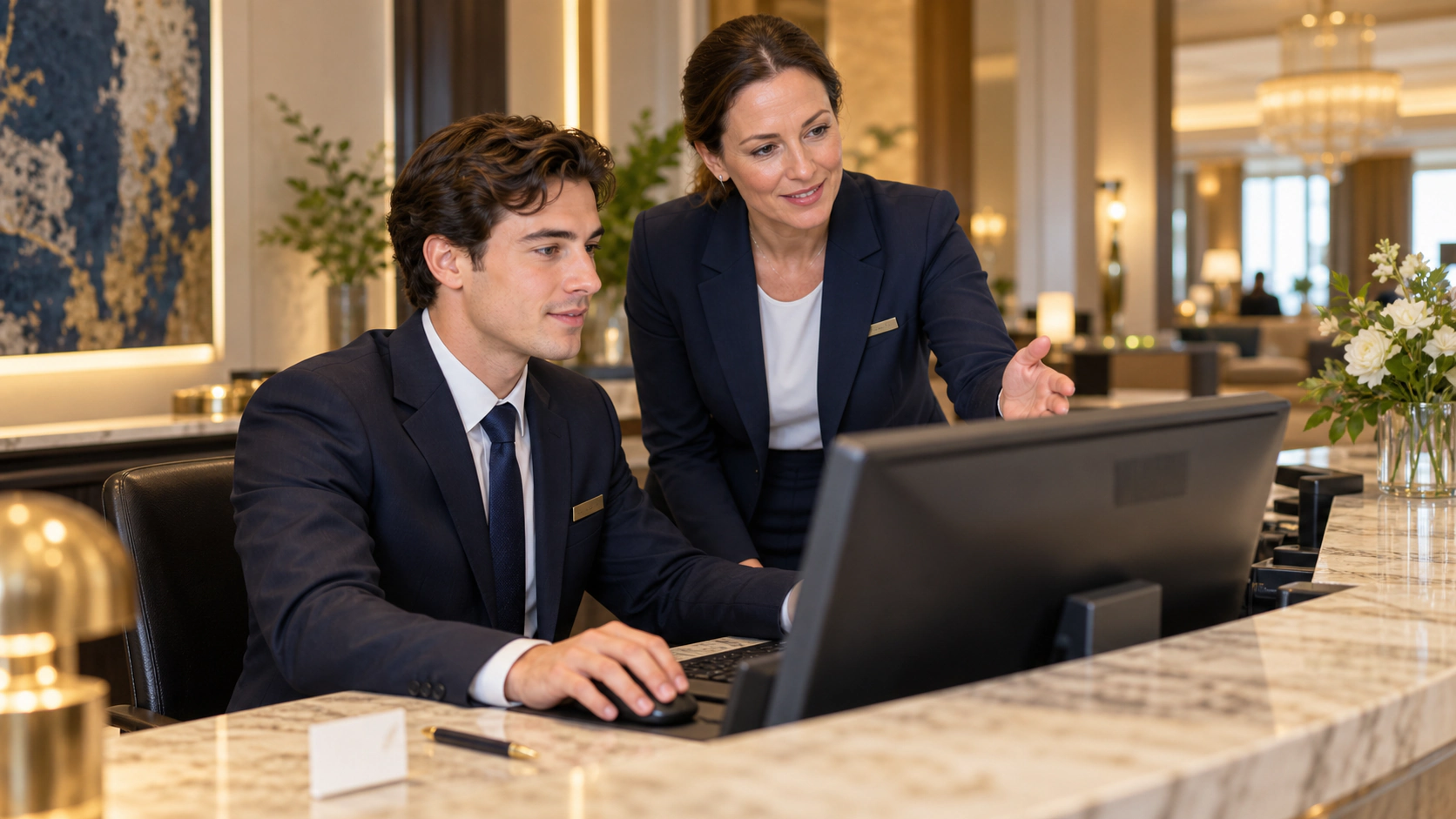
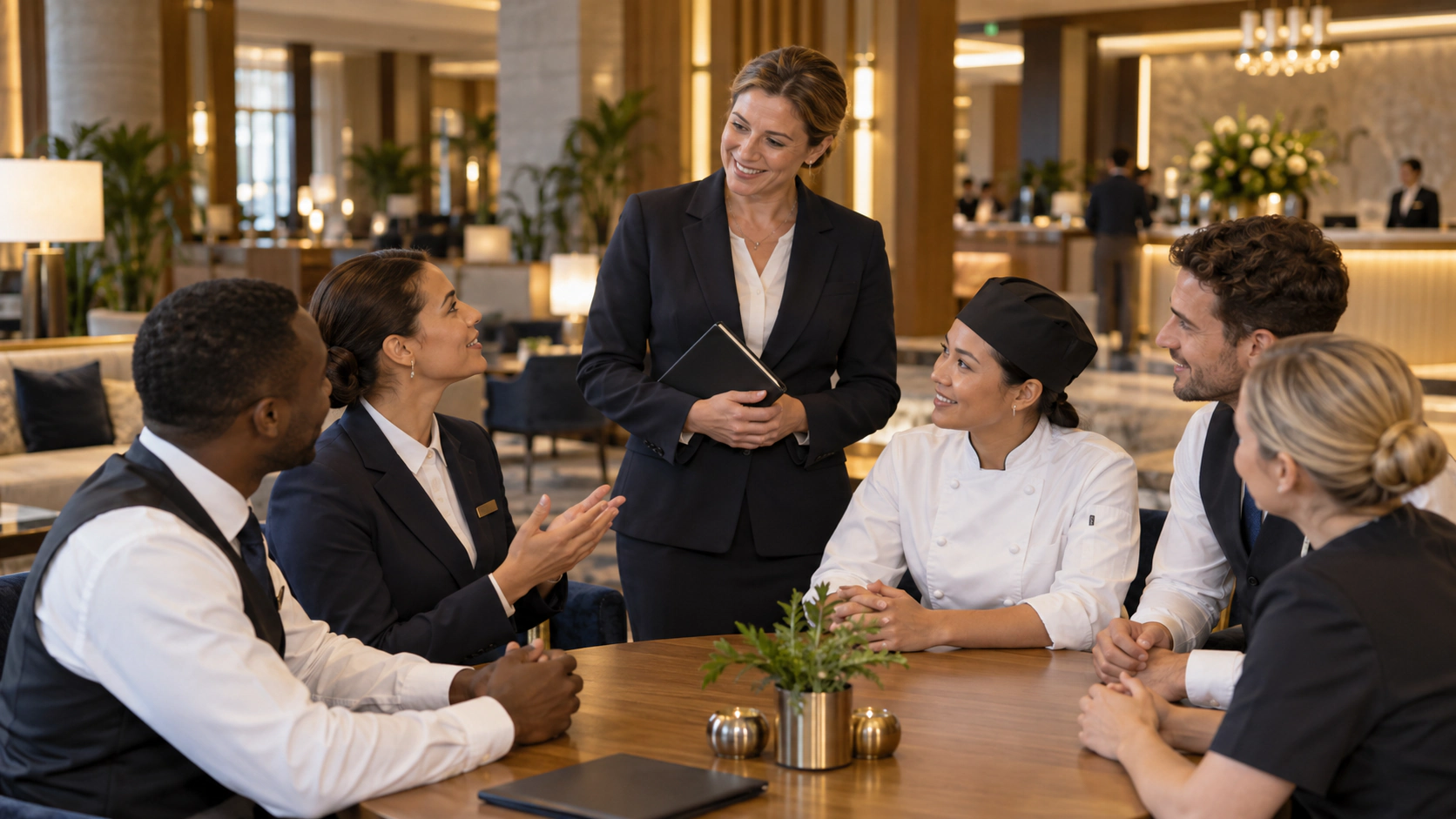
A Valentine’s package is an operational promise, not simply a decorated room and an attractive photograph. The hotel must be able to deliver the advertised room, meal, timing and personal touches at the agreed price. A successful plan connects revenue, reservations, housekeeping, food and beverage, engineering and guest relations before marketing begins.
This guide provides a reusable planning method for a seasonal couple’s stay, anniversary package or private-dining experience. Choose a concept appropriate to your market and property policy. Do not assume every guest celebrates the same occasion, wants public recognition or welcomes alcohol, flowers, fragrances or a room surprise.
1. Choose one guest need and one product

Begin with a clear use case: a local overnight escape, dinner for two, an anniversary stay or a quiet weekday experience. Check whether the property can serve that need without disrupting existing commitments.
A package brief should state the target guest, occasion, booking window, stay dates, number of people, room category, inclusions, exclusions and booking route. Assign one commercial owner who can resolve conflicting information.
Start with a manageable product. Three meal options, multiple room categories and unrestricted spa appointments may look appealing but multiply coordination risk. Add choice only when departments can confirm and deliver it reliably.
2. Define inclusions so they can be fulfilled
Replace emotional wording with verifiable detail. “Romantic dinner” needs a venue, number of guests, menu or credit value, service time and clear beverage arrangements. “Late checkout” needs either a guaranteed time with controlled inventory or a prominent availability condition.
| Inclusion | Information to confirm before sale |
|---|---|
| Accommodation | Room category, occupancy, nights and accessibility options |
| Dinner | Date, time, venue, menu basis, people included and supplement rules |
| Breakfast | Venue, service hours and number of guests |
| Decoration | Approved items, installation timing, consent and removal plan |
| Gift or amenity | Exact item, supplier, quantity and substitution rule |
| Spa or activity | Provider, reservation process, capacity and cancellation conditions |
| Transfer | Route, passengers, luggage, timing and confirmation responsibility |
Do not promise a facility your hotel does not have. A partner activity needs a confirmed supplier agreement and clear responsibility for changes, refunds and guest support.
3. Cost the package before choosing a selling price
Use consistent financial definitions. Distinguish guest-facing total price from hotel revenue after taxes or pass-through charges. Include the incremental cost of each component and the channel or payment costs that apply.
The example below uses fictional currency units (CU). It is an arithmetic illustration, not a recommended rate, tax treatment or forecast. Finance should validate the real model.
| Example item per package | CU |
|---|---|
| Net package revenue before selling costs | 1,000 |
| Incremental room servicing cost | 120 |
| Dinner ingredient and service cost | 180 |
| Breakfast incremental cost | 50 |
| Gift and decoration | 70 |
| Extra labour or supplier coordination | 40 |
| Channel and payment costs | 60 |
| Total variable cost | 520 |
| Contribution before fixed campaign cost | 480 |
Contribution is 1,000 minus 520, or 480 CU. With a fixed launch cost of 2,400 CU, the simple break-even volume is 2,400 divided by 480: five delivered packages. This excludes displacement, existing fixed overhead, refunds and other costs not included in the assumptions.
On a high-demand date, compare the package contribution with the contribution from the business it replaces. A package can appear profitable on its own while earning less than selling the same room and table separately. Do not treat revenue growth as profit growth automatically.
4. Let the scarcest inclusion set the sales limit
Count available rooms, confirmed dinner places, spa slots, gifts and installation capacity. Convert every limit into the same unit: deliverable packages.
Suppose there are 20 eligible rooms, dinner capacity for 30 package guests and 12 available gifts. For a two-person package with one gift, those limits are 20, 15 and 12 packages. If the gift is a guaranteed inclusion and no substitution is approved, the saleable limit is 12—not 20.
Reserve this capacity in the relevant systems. Someone must release unused allocations and close sales when the limit is reached. A marketing team’s spreadsheet alone does not stop a restaurant from selling the same tables elsewhere.
5. Protect privacy and obtain the right consent
Ask the booking guest how and when the hotel should discuss the arrangement. A surprise can fail if a confirmation mentions it on a shared channel or a receptionist announces it in front of the companion.
Obtain permission for room access and decoration through the approved process. Do not contact a companion, publish a photograph, announce a proposal or display personal names without appropriate consent. Record only the operational details needed and limit access to the teams delivering them.
Choose safe, property-approved decoration. Avoid open flames, blocked exits, loose items that create slip hazards or materials that may stain linen. Engineering, housekeeping and safety colleagues should approve unfamiliar setups. Staff must not disconnect or cover safety equipment to improve a photograph.
6. Treat food preferences as a service-control issue
Provide a route for discussing dietary needs before arrival. When a guest mentions an allergy, use the responsible food-service team and approved ingredient records. Do not assume that removing a garnish makes a dish safe or describe a dish as allergen-free without a supported basis.
The UK Food Standards Agency’s guidance is a useful example of the importance of accurate allergen information and management. Its legal requirements apply to its jurisdiction; local rules and the property’s approved food-safety controls govern the actual offer. [1]
Provide a non-alcoholic option appropriate to the concept and market. Do not build the value of every package around a drink a guest may not want or that the property may not be authorised to serve.
7. Publish one controlled offer record
Use the same approved facts on the website, booking confirmation, telephone script and social material. Make total-price presentation, eligibility, booking deadline, cancellation, amendment and no-show terms clear under the rules applicable to the sale.
An operationally useful offer includes who it is for, what is included, when it can be used, what requires a separate reservation and how to obtain confirmation. Avoid false countdowns, invented discounts and “limited availability” claims with no actual inventory control.
Use current, representative photography. A staged training image must not be presented as the exact room, view or meal being sold. Clearly state when an image is illustrative. A polished picture cannot correct an inaccurate product description.
8. Work backwards from the arrival date
Six to eight weeks before the event, agree the product, capacity, suppliers and costing. Four to six weeks before, approve terms, images, tracking and booking procedures. Two weeks before, test a complete reservation and check that every department receives the correct instructions.
One week before, reconcile room, restaurant, gift and activity lists. On the day before arrival, confirm late changes, dietary communications, setup timing and the person handling exceptions. These are suggested planning intervals; adapt them to procurement lead times and the scale of the operation.
During delivery, use an exception log. Record what changed, who approved the response, what the guest was told and whether a promised update occurred. Avoid copying unnecessary personal information into a widely shared briefing sheet.
9. Prepare scripts for the difficult moments
A fully booked dinner time: “The 8 pm sitting is no longer available. I can check the confirmed alternatives before you decide. I do not want to promise a time we cannot provide.”
A gift supplier problem: “The item described in your confirmation is unavailable. The manager would like to explain the approved alternatives and any adjustment before we make a change.”
An unconfirmed late checkout: “The package includes a late-checkout request, not a guaranteed departure time. I will check availability and confirm the latest approved time.” If the original sale promised a guarantee, do not rewrite it as a request at arrival; escalate the failure.
Practise these situations before launch. The goal is honest recovery, not persuading the guest to accept a broken promise without discussion.
10. Review delivered value after the campaign
Compare bookings with delivered stays, cancellations and refunds. Review actual variable costs, contribution, displaced business where relevant, guest feedback and operational failures. Record any leftover stock, supplier issues and additional labour.
Do not roll out the same package next year solely because it generated attractive social posts. Keep the components guests valued and departments delivered reliably. Remove complexity that did not create enough value and correct misleading wording before the next sale.
Practical HCA working resource supplied with this article.
Download Hotel Package Readiness and Delivery Register (CSV)
Related HCA guides
Update references
- Valentine Day Packages: The Ultimate Guide for Hotels to Create a Romantic Experience — Hospitality Career Academy
- Allergen Guidance for Food Businesses — Food Standards Agency / GOV.UK
- Frequently Asked Questions: Copyright — WIPO
Frequently asked questions
Must a Valentine’s package include alcohol or a spa treatment?
No. Build the offer around guest needs, property capability and local requirements. Dining, a quiet stay, a small approved amenity or a meaningful local experience may be more suitable.
Should late checkout be guaranteed?
Only when the property can commit the required room inventory and approves the promise. Otherwise, explain the availability condition clearly before purchase.
Use the planning tool
The included Package Readiness and Delivery Register assigns an owner, evidence, deadline and approval status to each component. Pair it with your approved costing model. HCA’s hotel marketing plan covers the wider campaign strategy; the reservation training guide covers booking accuracy and confirmation.
Sources and scope
[1] Food Standards Agency: Allergen Guidance for Food Businesses. UK jurisdictional reference for accurate allergen communication.
[2] WIPO: Copyright Questions and Answers. Background for checking rights to campaign photography and creative material. All package examples, planning intervals and financial figures are HCA teaching examples, not legal, tax or pricing advice.
Frequently asked question
Must a Valentine’s package include alcohol or a spa treatment?
No. Build the offer around guest needs, property capability and local requirements. Dining, a quiet stay, a small approved amenity or a meaningful local experience may be more suitable.
Hotel Package Readiness and Delivery Register