Hotel room upselling works best when it improves the guest’s stay and the hotel’s revenue at the same time. It is not a contest to sell the most expensive room to every arrival. It is a structured service conversation that connects a real guest need with a relevant available option at a clear price.
A couple celebrating an anniversary may value a suite, a balcony or a better view. A family may value more space, connecting rooms or breakfast. A business traveller may care more about a quiet floor, lounge access or flexible departure. The front desk employee’s job is to understand the stay, explain the difference honestly and allow the guest to decide without pressure.
This guide gives front office teams a practical method for preparing, presenting, recording and measuring room upsell offers.
What hotel room upselling means
An upsell moves the guest to a higher-value version of the product already being purchased, such as upgrading from a standard room to a sea-view room or suite. A cross-sell adds a different product or service, such as breakfast, airport transport, spa treatment or late checkout.
Both can be useful, but the conversation must stay relevant. An offer should solve a need, add comfort, save time or make the stay more memorable. If the employee cannot explain the guest benefit clearly, the offer is probably not ready to present.
The five principles of ethical hotel upselling
- Relevance before revenue. Match the offer to the guest’s purpose, party, preferences and length of stay.
- Accuracy before enthusiasm. Confirm inventory, room features, restrictions and the final price before presenting the option.
- Value before discount. Explain what changes for the guest instead of immediately reducing the price.
- Choice without pressure. Make one or two suitable recommendations, then respect the answer.
- Delivery after acceptance. An accepted upgrade becomes an operational promise that must be communicated and fulfilled.
These principles protect guest trust and stop upselling from becoming aggressive selling.
Step 1: Prepare the team before the shift
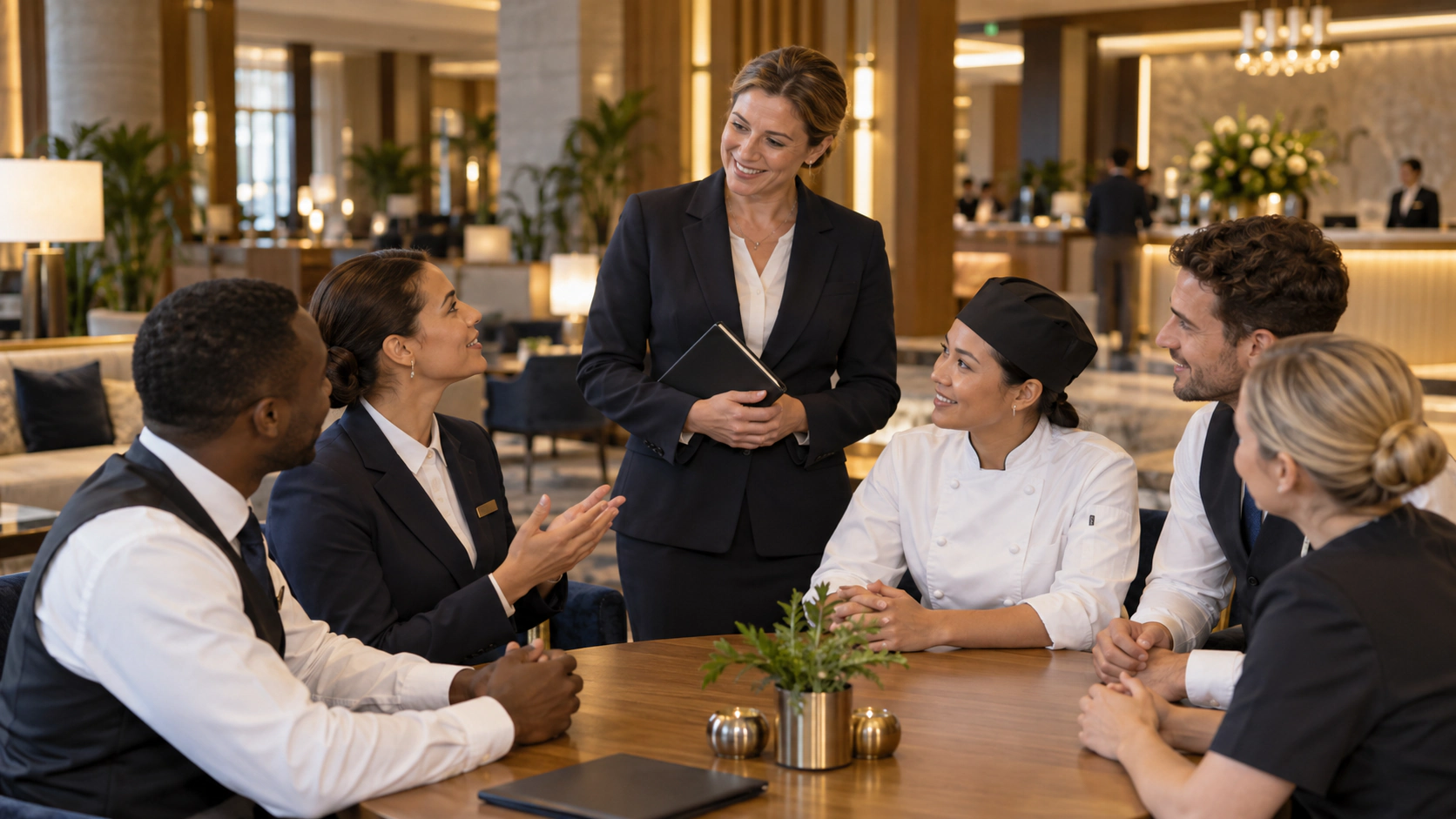
Successful upselling begins before the guest reaches the desk. The shift briefing should tell the team what can actually be sold and under which conditions.
The briefing should cover:
- available room categories and the number of sellable upgrades
- room features that matter to guests, such as size, view, balcony, bed type, floor, lounge access or separate living space
- approved upgrade prices, taxes and package inclusions
- rooms that are out of order, blocked, pending inspection or unavailable for operational reasons
- eligibility rules, loyalty benefits and complimentary-upgrade priorities
- who may approve exceptions, discounts or recovery upgrades
- expected high-demand periods and arrival peaks
A beautiful room description is useless if the room is not inspected or the price is wrong. Front office, reservations, revenue management and housekeeping therefore need one shared understanding of sellable inventory.
Step 2: Discover the guest’s stay purpose
The strongest upsell conversations begin with curiosity, not a sales pitch. Ask one or two natural questions while confirming the reservation.
Useful questions include:
- “What brings you to Dubai this time?”
- “Will you be working from the room during your stay?”
- “Are you travelling with children or expecting visitors?”
- “Is a view, balcony or extra space important to you?”
- “Are you celebrating anything during the stay?”
- “What time do you expect to leave on your final day?”
Do not turn check-in into an interrogation. Use information the guest volunteers and information already collected lawfully for the reservation. Avoid assumptions based on appearance, nationality, family status or perceived spending power.
Step 3: Match the need to the right upgrade
A good recommendation follows a simple pattern:
Guest need → room feature → practical benefit → complete price → choice
For example:
“Since you mentioned that you will be working from the room, we have an executive room available with a larger desk, quieter location and lounge access. The additional charge is AED ___ per night including applicable taxes. Would you like me to show you the option?”
This is stronger than saying, “Would you like a better room?” The guest understands exactly what is different and why it may matter.
Match examples
| Guest need | Relevant option | Benefit to explain |
|---|---|---|
| Special occasion | Suite, view room or celebration package | More memorable setting and additional space |
| Family stay | Larger room, connecting setup or breakfast package | Comfort, easier supervision and convenience |
| Business stay | Executive room, lounge access or quiet floor | Workspace, refreshments and reduced interruptions |
| Long stay | Larger room or kitchenette | Storage, living comfort and practical independence |
| Early arrival | Inspected higher category available now | Immediate access instead of waiting, if policy permits |
| Late departure need | Late checkout or day-use extension | More time and reduced travel-day stress |
Never promise a feature that the assigned room does not have. Verify the room description and the actual room status before confirmation.
Step 4: Choose the right moment
Upselling can happen at several points in the guest journey.
During reservation
Reservations agents can explain meaningful room differences while the guest is still comparing options. This is often the best time to sell a category that genuinely fits the trip.
Before arrival
A pre-arrival email, message or call can offer available upgrades with transparent terms. The communication should be targeted rather than sent as the same generic offer to everyone.
At check-in
The front desk can use live availability and the guest conversation to make a personalised offer. Keep the process quick when there is a queue.
During the stay
A room move or added service may be relevant after the guest identifies a need. Do not use a genuine service failure as an excuse to charge the guest for a solution the hotel should provide as recovery.
Before departure
Late checkout, transport or a future-stay offer may add value, provided availability and policy allow it.
Step 5: Use a clear, natural script
A useful upsell script has four parts:
- acknowledge the guest’s need
- recommend one relevant option
- explain two or three benefits
- state the full additional price and ask for a decision
Leisure-couple script
“You mentioned that this is an anniversary stay. We have a corner suite available with a separate living area and a wider city view. The additional charge is AED ___ per night including applicable taxes. Would you like to upgrade for the celebration?”
Family script
“Because you are travelling with two children, a family room may be more comfortable. It gives you additional space and the bedding setup shown here. The difference is AED ___ per night. Shall I check whether it is ready now?”
Business-traveller script
“For your three working days, the executive room includes a larger desk and lounge access for refreshments. The additional charge is AED ___ per night. Would that make the stay more convenient for you?”
When the guest declines
“Certainly. Your current room remains confirmed exactly as booked. I just wanted to make sure you knew the option was available.”
A respectful decline response protects the relationship and prevents the guest from feeling judged.
Handling common objections
“It is too expensive.”
Acknowledge the concern and restate the value once. Do not argue.
“I understand. The difference reflects the separate living room and lounge access. Your original room is fully confirmed, so we can keep it exactly as booked.”
“Can you give it for free?”
Follow loyalty, recovery and authorisation rules. Do not invent benefits or undermine the rate structure.
“I can check the benefits attached to your reservation and membership. Any complimentary upgrade depends on eligibility and availability. The confirmed paid option today is AED ___.”
“Can I see the room?”
Follow property security and operational policy. Use approved photos, a virtual tour or an inspected show room where available. Do not delay other arrivals or expose an occupied room.
“I will decide later.”
Explain that availability and price may change, then leave the choice with the guest.
Record the upgrade correctly
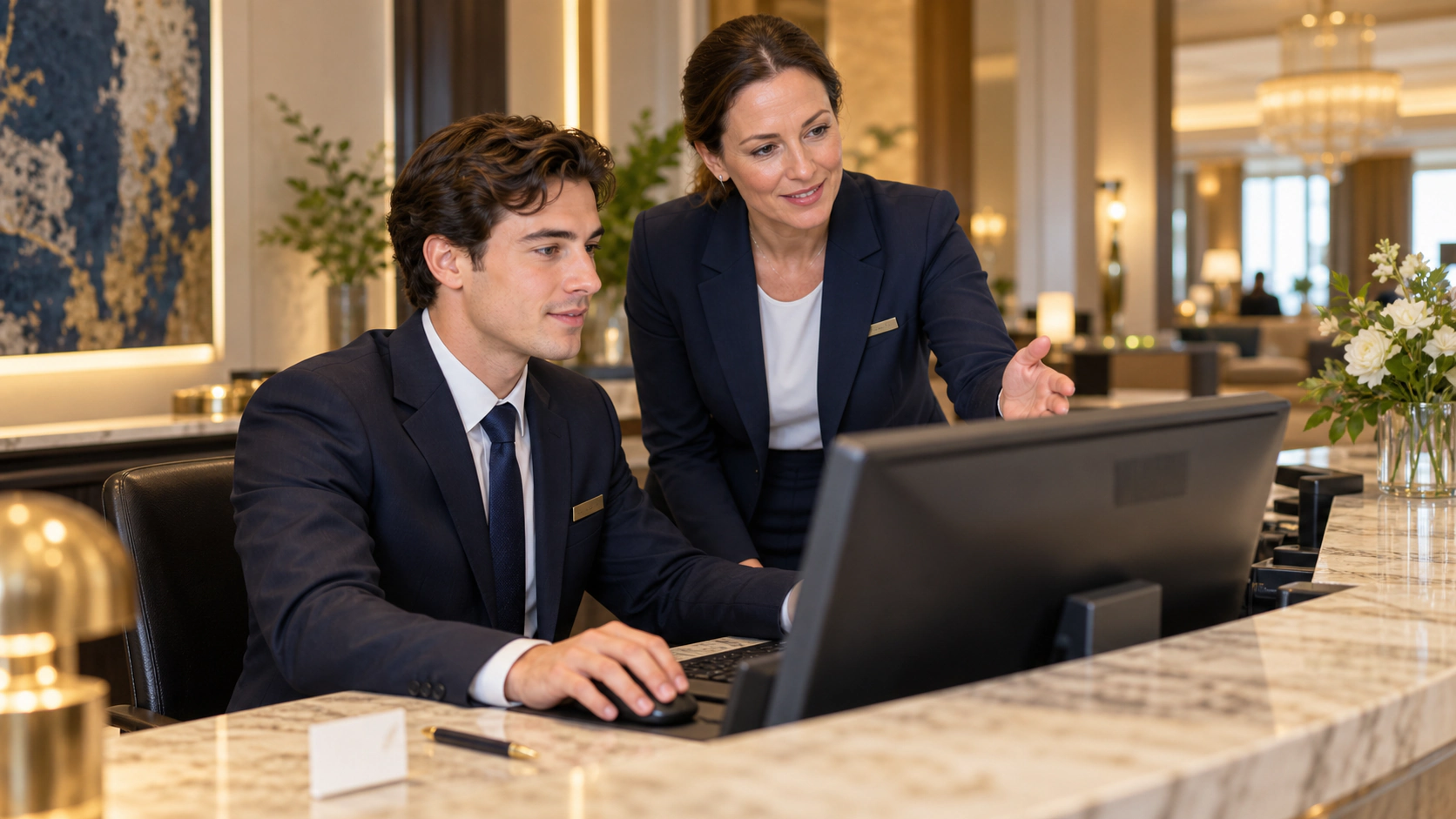
After acceptance, the employee must complete the transaction accurately. The checklist should include:
- reconfirm the new room category and total additional charge
- update the reservation and room assignment in the PMS
- apply the correct rate code, package or routing instruction
- obtain any required signature or digital acceptance
- update deposit, payment or authorisation requirements
- communicate special setup needs to housekeeping or guest services
- add factual notes without judgemental comments
- confirm the new inclusions and exclusions to the guest
- issue revised keys and directions securely
An upsell is not complete when the guest says yes. It is complete when the promised product is delivered and the records are accurate.
Protect privacy, fairness and guest trust
Do not use sensitive personal information to pressure a guest. Do not announce room numbers, upgrade prices or celebration details where others can hear. Do not discriminate between guests based on appearance or assumptions. Apply approved price and eligibility rules consistently.
Where calls or digital messages are recorded, follow local law and company policy. Where payment details are required, use the approved secure process and never write sensitive card information in free-text notes.
Train through role-play, not scripts alone
A strong 30-minute upselling practice can include:
- Five-minute inventory briefing: room categories, features, sellable stock and authority limits.
- Five-minute product challenge: each employee explains one room category without using vague words such as “better” or “luxury.”
- Ten-minute role-play: one employee acts as guest, one as agent and one as observer.
- Five-minute feedback: check discovery questions, relevance, price clarity and response to decline.
- Five-minute system practice: update a test reservation and verify the new room, rate and notes.
Role-play scenarios should include a family, business traveller, special occasion, loyalty member, sold-out night and guest who declines.
Measure performance without rewarding pressure
Measure quality as well as revenue. A balanced dashboard can include:
- eligible arrivals: reservations for which an approved paid option was genuinely available
- offers made: relevant offers presented and recorded
- accepted upgrades: paid upgrades confirmed
- offer rate: offers made ÷ eligible arrivals
- conversion rate: accepted upgrades ÷ offers made
- incremental room revenue: additional room revenue generated by accepted upgrades
- net contribution: incremental revenue minus included costs, discounts, commissions or incentives where relevant
- delivery failures: accepted upgrades not delivered as promised
- guest complaints or negative feedback linked to selling behaviour
Do not compare employees only by raw revenue. Shift mix, inventory, guest profile and length of stay can make one employee’s opportunity very different from another’s. Review call quality, relevance and record accuracy alongside commercial results.
Front desk upselling checklist
Before offering:
- Is the upgraded room actually available and inspected?
- Do I know the complete price and inclusions?
- Is the option relevant to this guest?
- Am I authorised to offer it?
During the conversation:
- Did I ask a natural discovery question?
- Did I explain the benefit rather than criticise the booked room?
- Did I state the full price clearly?
- Did I give the guest a comfortable choice?
After acceptance:
- Did I update the PMS, payment and room assignment correctly?
- Did I communicate the promise to the relevant departments?
- Did I confirm the new details to the guest?
Final takeaway
Hotel room upselling is effective when it is prepared, personalised, transparent and properly delivered. The best front desk employees do not push every guest toward the highest category. They understand the stay, recommend the most relevant available option, explain the value clearly and respect the guest’s decision.
When hotels combine product knowledge, role-play, authority controls and balanced measurement, upselling becomes a professional guest-service skill rather than an uncomfortable sales tactic.
Related HCA guides
Update references
- HCA original article — Hospitality Career Academy
- Hotel Room Types Explained — Hospitality Career Academy
- Hotel, Motel, and Resort Desk Clerks — O*NET OnLine
Frequently asked question
How can front desk employees upsell rooms without being pushy?
Ask one natural question, recommend only a relevant available option, explain the guest benefit and complete price clearly, then respect the answer and deliver the accepted upgrade accurately.
Explore HCA front office training