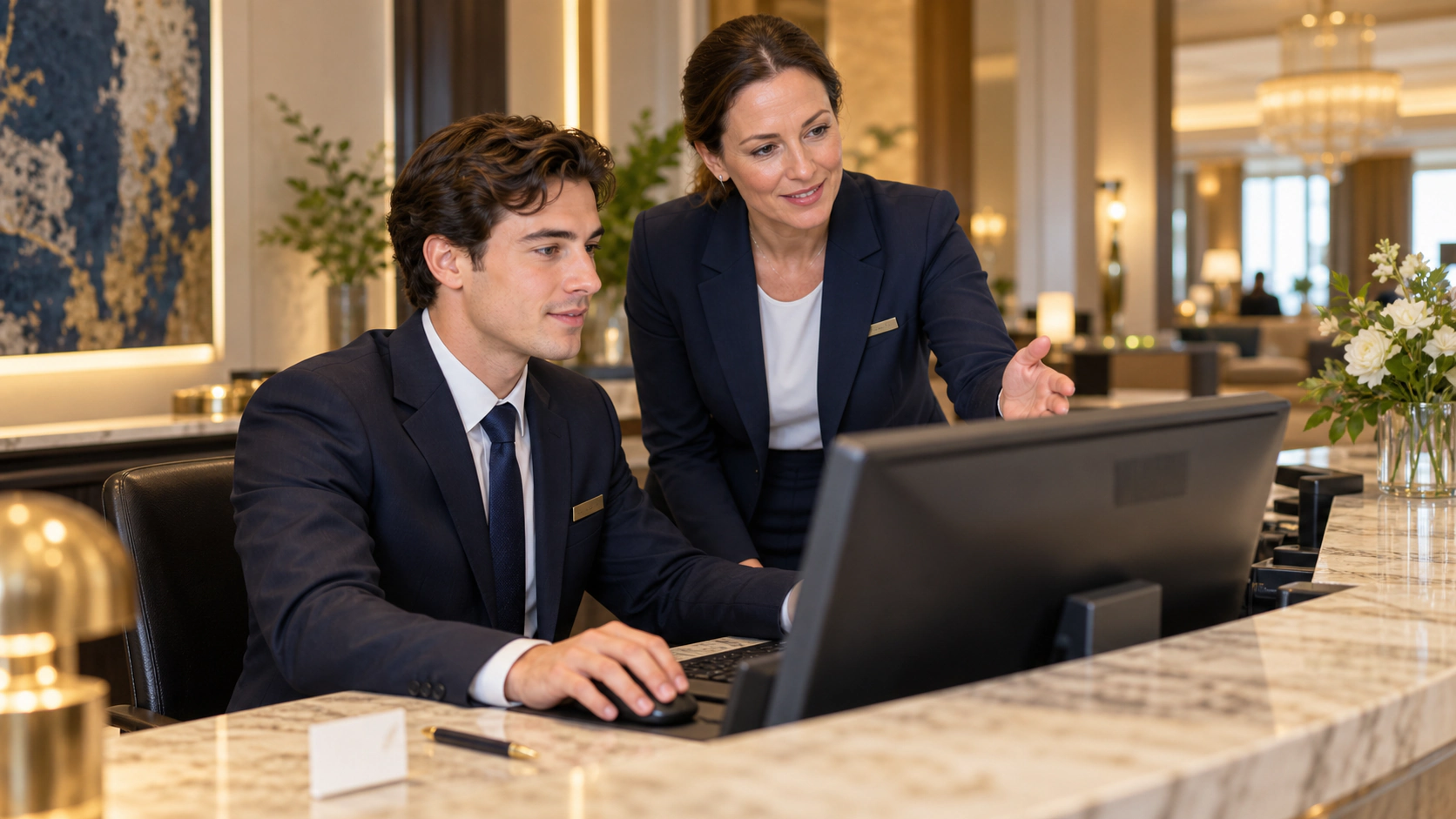
A hotel marketing associate supports the planning, production, coordination and measurement of marketing activity across rooms, restaurants, meetings, events, spa, careers and destination content. The role is often an early-career position, but it carries real operational responsibility: one inaccurate price, expired offer, unauthorised photograph or broken booking link can damage guest trust and create extra work for several departments.
The exact job varies by property. In a small hotel, one associate may support social media, photography, website updates, email, collateral, events and reporting. In a larger group, the role may focus on one channel or report to a director, cluster team, agency or e-commerce leader. The job description should therefore define ownership and approval clearly rather than copy a generic list.
The role in one sentence

The hotel marketing associate turns approved business priorities and verified product information into accurate, accessible and measurable marketing activity, while coordinating the people and systems needed to deliver it.
Where the role sits
The associate may report to:
- director or manager of marketing;
- director of sales and marketing;
- communications or public-relations leader;
- e-commerce or digital marketing manager;
- cluster or regional team;
- general manager in a smaller property.
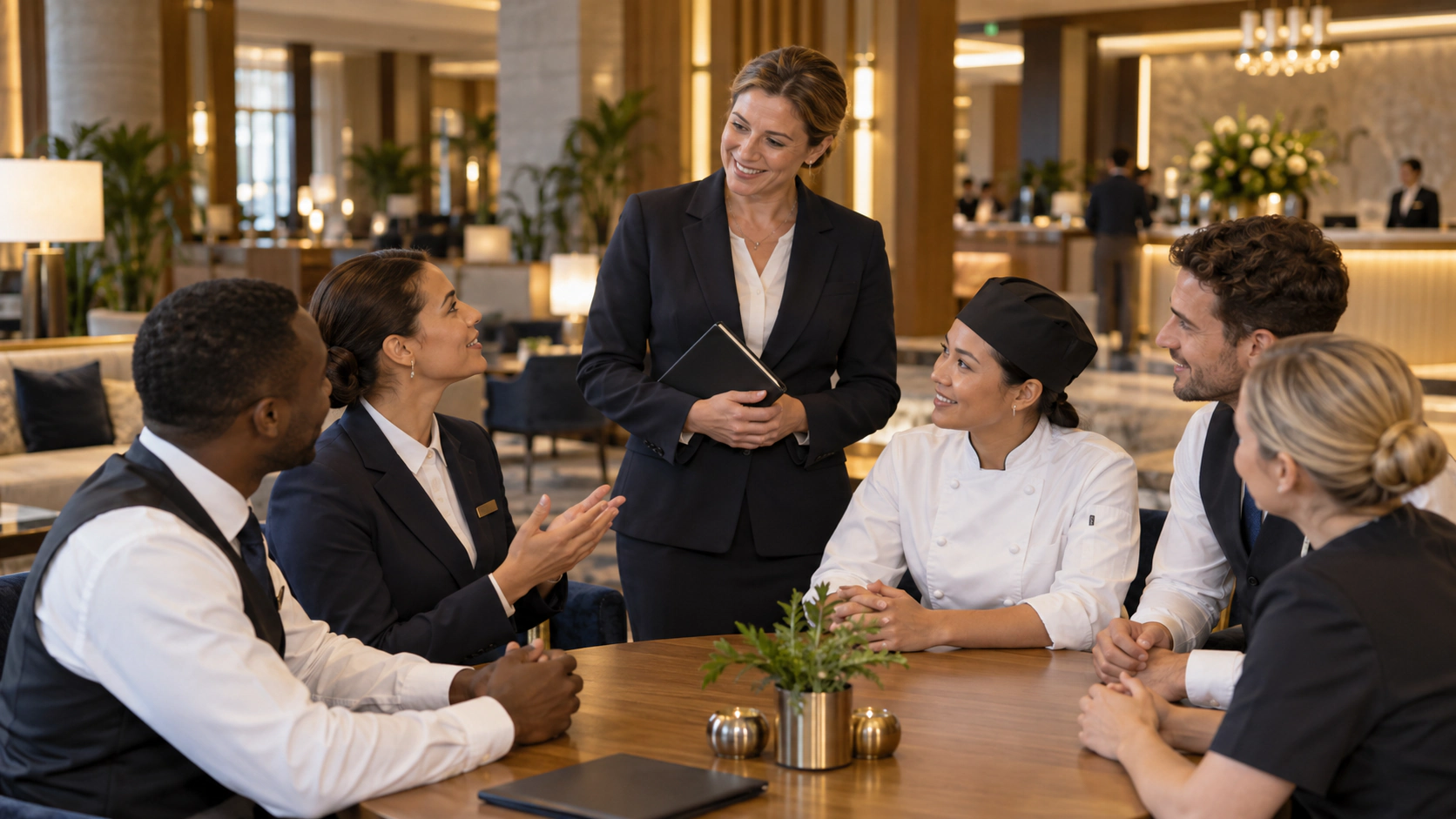
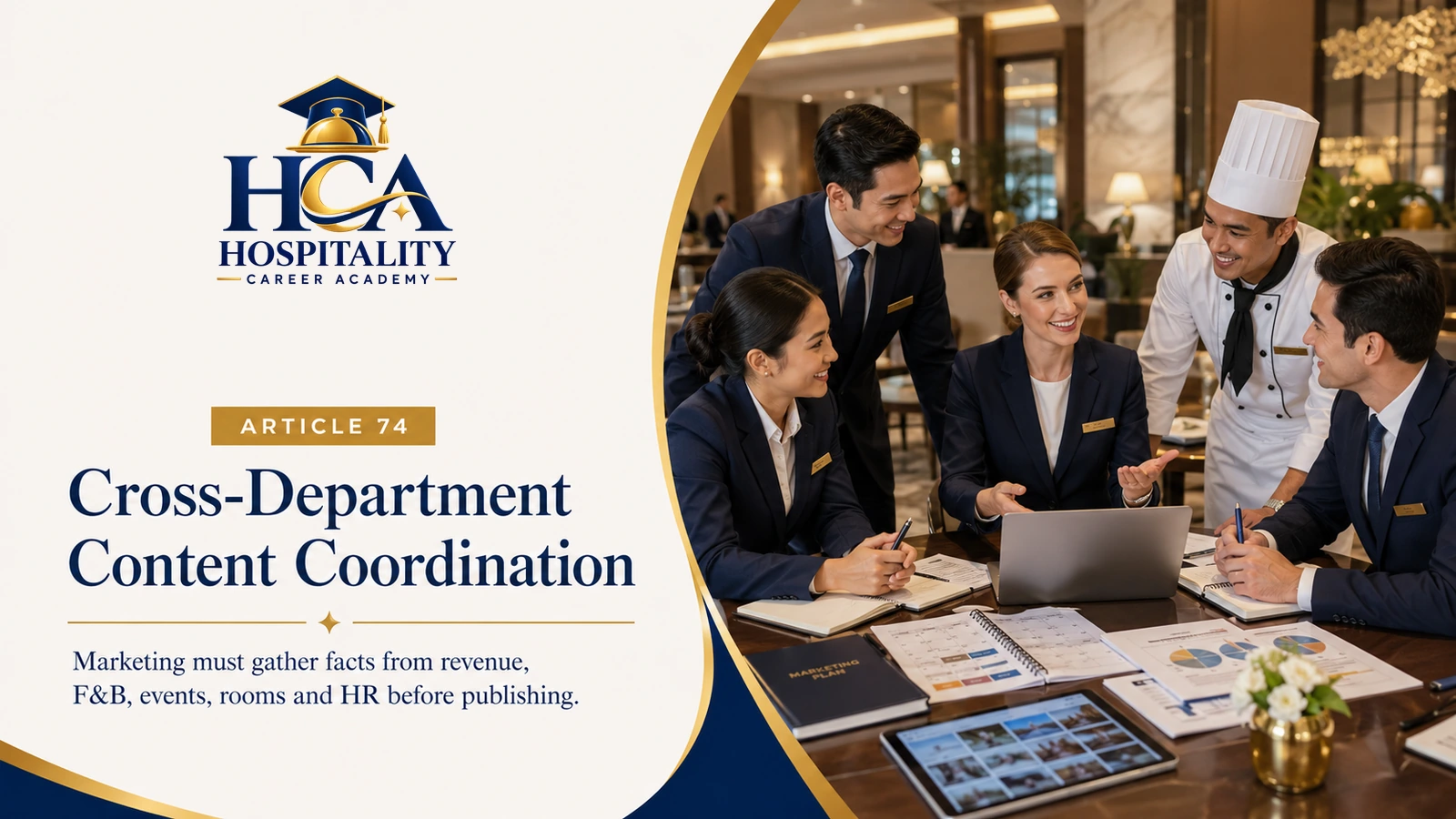
Common internal partners include revenue, reservations, front office, food and beverage, culinary, events, spa, human resources, finance, information technology and operations. Agencies, photographers, printers, creators and platform partners may be external partners.
A useful responsibility matrix should state who:
- sets strategy;
- owns product facts;
- approves price and conditions;
- approves creative;
- publishes;
- controls budget;
- responds to guests;
- handles complaints and crises;
- reports results;
- stores final assets.
Main responsibilities
1. Maintain the marketing calendar
The associate helps translate business priorities into a realistic calendar.
Inputs may include:
- room need dates;
- packages and booking windows;
- restaurant menus and events;
- meetings and wedding priorities;
- spa or recreation activity;
- destination seasons;
- careers and employer-brand stories;
- public relations and partnerships;
- loyalty or database communication;
- website and listing updates.
Each item should include objective, audience, product, owner, channel, format, deadline, approval, call to action, tracking and measurement. A calendar is not complete if it lists only a publication date and caption.
2. Gather and verify product information
Marketing should not guess operational facts. Before producing an asset, the associate must confirm:
- product or offer name;
- dates and times;
- price presentation;
- taxes, service charges and inclusions;
- availability or capacity;
- room or venue represented;
- menu and dietary information;
- booking and cancellation conditions;
- address, contact and link;
- person authorised to approve.
Use one current source of truth. If information changes, update all affected channels rather than correcting only the newest post.
3. Support content production
The associate may:
- write briefs;
- draft copy;
- organise photography;
- capture simple approved content;
- resize and adapt assets;
- prepare social posts;
- update digital screens or collateral;
- coordinate translations;
- create email and website drafts;
- archive final files.
Production quality includes accuracy, readability and rights—not aesthetics alone.
Before approval, check:
- title and call to action;
- spelling and dates;
- price and conditions;
- correct property and product;
- brand identity;
- mobile readability;
- colour contrast;
- captions or transcript where useful;
- alt text for meaningful web images;
- guest and employee permissions;
- music, image, font and creator rights;
- file size and format;
- live destination link.
W3C accessibility principles provide useful prompts for digital content: information should be perceivable, operable, understandable and robust. The hotel should apply the specific standards and laws relevant to its websites and markets.
4. Coordinate website and listing accuracy
The associate may not own the website or booking engine, but should help monitor accuracy across:
- official website;
- booking engine;
- restaurant and spa pages;
- map and business profiles;
- online travel listings;
- event pages;
- social profiles;
- downloadable menus or brochures;
- campaign landing pages.
Create an issue log with page, problem, evidence, owner, priority, correction date and final check. Do not overwrite rate, room or policy information without the authorised owner.
5. Support social media and community activity
Depending on the structure, the associate may prepare and schedule posts, monitor comments or route messages. The hotel social media specialist guide covers the full specialist role; the associate may support parts of that workflow.
Key controls include:
- use approved business accounts and named access;
- follow the content and approval calendar;
- verify facts immediately before publishing;
- test links;
- respond only within approved authority;
- protect guest privacy;
- escalate complaints, safety issues and media contact;
- record useful audience questions;
- remove expired offers.
A response should solve or route the guest’s need, not merely generate visible engagement.
6. Assist with campaigns and promotions
For each campaign, the associate may coordinate:
- brief;
- audience;
- offer;
- content;
- landing page;
- media plan;
- creator or partner deliverables;
- approvals;
- tracking;
- launch checklist;
- monitoring;
- final report.
Use consistent campaign names and tracking parameters. Google Analytics documents how source, medium and campaign data are used to report traffic acquisition. Tracking should be tested before launch and aligned with the hotel’s privacy and consent setup.
7. Support email and customer communication
Possible tasks include:
- preparing approved email content;
- organising audience lists in authorised systems;
- checking language and links;
- coordinating offers;
- testing display on mobile;
- scheduling;
- reporting opens, clicks and downstream actions where available;
- managing suppression and preference requirements through the approved platform.
Do not export guest contact data into personal spreadsheets or upload it to unapproved tools. Follow the organisation’s consent, access, retention and deletion rules.
8. Coordinate print, signage and property collateral
The role may support:
- menus;
- flyers;
- posters;
- tent cards;
- event signage;
- room collateral;
- sales presentations;
- recruitment materials;
- digital displays.
Check quantity, dimensions, language, version, placement, expiry and removal. Old printed material can create the same trust problem as an expired web page.
9. Support partnerships, creators and events
The associate may coordinate local partners, photographers, creators, media visits or launch events.
Record:
- objective;
- contact;
- approved deliverables;
- dates;
- compensation or complimentary value;
- disclosure requirements;
- content and reuse rights;
- guest or employee permissions;
- operational host;
- budget;
- reporting evidence.
The U.S. FTC guidance is one useful jurisdictional example: a relationship between a brand and endorser should be disclosed clearly when relevant. It is not a substitute for local law; check current requirements in the target market.
10. Collect and report performance
A report should connect the activity to a decision.
Possible measures include:
Awareness
- relevant reach;
- video completion;
- profile or branded search movement;
- qualified press or partner exposure.
Consideration
- room, menu or event page views;
- engaged sessions;
- saves and useful shares;
- enquiry-start behaviour.
Action
- booking starts;
- reservations;
- qualified leads;
- tracked codes;
- revenue or net contribution where reliably available.
Quality and control
- fact errors;
- broken links;
- expired assets;
- approval delays;
- rights issues;
- guest-response handover;
- on-time delivery.
Always explain limitations. A click is not a booking, and a booking may be influenced by several channels. Separate direct attribution from assisted or directional evidence.
Daily, weekly and monthly workflow
Daily
- check priority messages and campaign issues;
- review scheduled posts and links;
- confirm urgent product changes;
- update the marketing calendar;
- follow up approvals;
- record website or listing errors;
- organise assets and requests;
- route guest comments appropriately.
Weekly
- attend the commercial or marketing meeting;
- collect next-month operational priorities;
- verify offers and content;
- update the production board;
- coordinate photography and translations;
- review campaigns and website actions;
- share a concise status report;
- archive completed work.
Monthly
- review results against objectives;
- audit key digital profiles and landing pages;
- remove expired collateral;
- inspect budget and supplier status;
- update audience and content learning;
- prepare the next calendar;
- review access, rights and asset storage;
- agree development priorities with the manager.
A sample weekly production board
| Item | Objective | Fact owner | Marketing owner | Status | Risk |
|---|---|---|---|---|---|
| Weekday room offer | Need-date demand | Revenue | Associate | Awaiting price approval | Deadline |
| Restaurant menu reel | Local awareness | F&B | Associate | In editing | Allergen wording |
| Wedding landing page | Qualified leads | Events | Web team | QA | Form test |
| Team career story | Employer brand | HR | Associate | Consent pending | People rights |
| Destination guide | Search usefulness | Concierge | Content lead | Draft | Seasonal accuracy |
The associate should escalate blocked work early instead of publishing incomplete information.
Approval matrix
| Content | Typical fact owner | Typical approval |
|---|---|---|
| Room rate or package | Revenue/reservations | Commercial leader |
| Restaurant menu or event | F&B/chef | F&B and marketing |
| Meeting package | Events/sales | Events and commercial |
| Guest story | Guest plus operational owner | Consent/privacy process |
| Employee story | Employee and HR | HR/brand |
| Recruitment post | HR | Hiring manager/HR |
| Sustainability claim | Responsible operational owner | Evidence/legal/corporate |
| Crisis statement | Authorised communications lead | GM/legal/corporate |
The exact structure varies. The associate should never become the source of truth for facts owned by another department.
Essential skills
Writing and editing
Clear headlines, captions, email, web copy and briefs. The associate should simplify information without changing its meaning.
Hospitality product knowledge
Understanding rooms, rates, food and beverage, events, guest journey, seasonality and service recovery helps prevent weak or inaccurate campaigns.
Organisation and project control
The role handles multiple deadlines, owners and versions. Good file naming and follow-up matter.
Visual judgement
The associate does not always need to be a professional designer, but must recognise weak composition, unreadable text, wrong crops, inconsistent branding and inappropriate imagery.
Data literacy
They should understand objectives, tracking, basic analytics, campaign reporting and the limits of attribution.
Communication and stakeholder management
The associate needs to ask clear questions, challenge missing information respectfully and follow up without creating confusion.
Commercial thinking
Marketing activity should connect to audience, price, need period, conversion path and value.
Risk awareness
Privacy, permissions, trademarks, music, photography, claims, competitions, influencers and guest communication require controls.
O*NET’s current profile for Market Research Analysts and Marketing Specialists includes researching markets, gathering competitor and customer information, planning campaigns, analysing web metrics and making recommendations. A hotel marketing associate may perform parts of this scope at a junior or supporting level.
Useful tools and systems
Tools vary, but categories may include:
- content calendar and project management;
- digital asset library;
- content management system;
- social publishing;
- email or CRM platform;
- analytics and reporting;
- booking and restaurant links;
- survey and feedback tools;
- design and image editing;
- spreadsheets and dashboards;
- approval and ticketing systems.
The associate must use authorised accounts, permissions and storage. Tool knowledge is useful; controlled work is more important.
KPIs for a hotel marketing associate
Avoid setting a KPI solely for number of posts. Use a balanced scorecard.
Delivery
- percentage of agreed work delivered on time;
- approval lead time;
- production rework;
- campaign launch accuracy.
Content quality
- fact-error rate;
- broken-link rate;
- expired-content removal;
- accessibility and language QA completion;
- rights documentation.
Audience and action
- qualified traffic;
- content interaction linked to the objective;
- booking or enquiry actions;
- lead quality;
- campaign cost where applicable.
Operational contribution
- recurring guest questions converted into content;
- listing issues resolved;
- commercial priorities supported;
- department satisfaction with accuracy and process.
Development
- skills completed;
- portfolio evidence;
- system competence;
- increasing ownership without control failures.
Targets should match the role’s authority. Do not hold a junior associate solely responsible for revenue controlled by demand, price, product, distribution and operations.
Entry requirements
A hotel may recruit from:
- marketing, communications or business studies;
- hospitality or tourism;
- digital media or design;
- relevant internship or portfolio experience;
- operational hotel experience with strong marketing ability.
A degree may be preferred for some roles but is not the only route. Evidence of organised, accurate work is valuable.
Build a credible portfolio
A beginner can create supervised or clearly labelled practice examples:
- campaign brief;
- four-week content calendar;
- bilingual hotel offer;
- landing-page improvement audit;
- social response matrix;
- email draft;
- simple dashboard;
- photography brief;
- brand-consistency check;
- post-campaign review.
Never present invented performance as real. State whether the work is live, simulated, academic or completed with permission.
Interview and work-sample preparation
Be ready to explain:
- how you verify a hotel offer;
- how you prioritise deadlines;
- what you would do with a negative public comment;
- how you protect guest images;
- how you measure a campaign;
- how you would improve a weak landing page;
- an example of feedback you accepted;
- how you work with operations.
A useful work sample may ask the candidate to review a draft offer, find errors, write a brief and propose measures. It should assess actual job skills, not unpaid production of a complete live campaign.
The first 90 days
Days 1–30: Learn and control
- learn the hotel product and brand;
- map owners and approvals;
- review accounts and access;
- audit active campaigns and collateral;
- understand the calendar;
- shadow operations;
- learn reporting definitions;
- fix small accuracy issues.
Days 31–60: Produce with supervision
- own selected calendar items;
- write briefs and drafts;
- coordinate one controlled shoot;
- support one campaign;
- update approved pages;
- produce a weekly status report;
- document lessons and corrections.
Days 61–90: Take measured ownership
- manage a small campaign or content stream;
- improve one workflow;
- report results and limitations;
- present an audience or guest insight;
- build a portfolio record;
- agree the next development goal.
Common mistakes
- publishing before the fact owner approves;
- treating the role as social posting only;
- storing files without naming or version control;
- reusing expired offers;
- reporting likes without a decision;
- editing price or policy independently;
- using guest content without permission;
- ignoring Arabic quality;
- relying on personal account access;
- hiding mistakes instead of correcting quickly;
- accepting every request without prioritisation;
- confusing busy activity with useful output.
Frequently asked question
What is the difference between a hotel marketing associate and a hotel social media specialist?
A marketing associate usually supports a broader mix of campaigns, website updates, content, collateral, partnerships, email, research and reporting. A social media specialist normally has deeper ownership of social content, publishing, community management and platform performance. In some hotels one person may perform both roles, so the job description must define the actual scope.
Final takeaway
The hotel marketing associate is a coordinator, creator, checker and learner. The strongest associates do not simply make content look good. They make sure the message is accurate, approved, useful, accessible, measurable and connected to a real hotel priority.
Use the HCA workflow and KPI tracker to organise tasks, facts, owners, deadlines, links, results and next actions. A reliable system will help an entry-level marketer build trust—and earn larger responsibility.
Bilingual tracker for tasks, product facts, owners, approvals, deadlines, live links, quality checks, KPIs, results and development evidence.
Download Hotel Marketing Associate Workflow and KPI Tracker (CSV)
Related HCA guides
- hotel social media specialist
- e-commerce job description
- hotel marketing plan
- first hotel social media campaign
- public relations officer guide
Update references
- Unlocking the Potential of a Marketing Associate: A Comprehensive Guide — Hospitality Career Academy
- Market Research Analysts and Marketing Specialists — O*NET OnLine
- Campaigns and traffic sources — Google Analytics Help
- Accessibility Principles — W3C Web Accessibility Initiative
- Endorsements, Influencers, and Reviews — U.S. Federal Trade Commission
- Hotel Social Media Specialist: Job Description, Workflow, Skills and KPIs — Hospitality Career Academy
- Hotel Marketing Plan: A Practical Framework for Hotels and Resorts — Hospitality Career Academy
Frequently asked question
What is the difference between a hotel marketing associate and a social media specialist?
A marketing associate usually supports a broader mix of campaigns, website updates, collateral, email, research and reporting. A social media specialist normally has deeper ownership of social publishing and community performance.