Human resources in hospitality is not a quiet back-office function separated from the operation. Hotel HR teams recruit people for round-the-clock departments, support onboarding, maintain sensitive employee records, coordinate training, help managers apply policy consistently and contribute to a workplace where employees can serve guests well.
That combination makes hospitality HR attractive to people who enjoy organisation, communication and working with different cultures. It also carries responsibility. An HR employee may handle private information, difficult conversations, deadlines and decisions that affect someone’s working life. Good intentions matter, but credibility comes from accuracy, fairness, confidentiality and disciplined follow-through.
This guide explains how to enter the field realistically. It does not assume that every beginner needs the same degree, certificate or previous title. It shows the work you may be asked to do, the evidence employers look for and how to prepare during the next 90 days.
What hospitality HR is responsible for
The exact structure changes by company and country, but a hotel or hospitality people team commonly supports the employee lifecycle:
- Workforce planning and recruitment — confirming vacancies, preparing job information, screening applications, arranging interviews and keeping selection records.
- Pre-employment and onboarding — collecting approved documents, coordinating medical or legal requirements where applicable, preparing orientation and helping the new employee enter the operation safely.
- Personnel administration — maintaining accurate files, employee data, leave records, letters and authorised reports.
- Learning and development — coordinating induction, mandatory learning, departmental training and evidence of completion.
- Performance and development — supporting goal-setting, appraisal cycles, development plans and manager follow-up.
- Employee relations and engagement — directing questions to the correct process, documenting concerns, supporting communication and helping leaders improve the employee experience.
- Separation and records closure — completing approved clearance, final documentation, access changes and file-retention steps.
A beginner does not normally own every decision. The important skill is knowing your responsibility, the approval route and when to escalate.
What entry-level hotel HR roles actually do
Job titles vary. You may see HR assistant, people-and-culture coordinator, talent and culture coordinator, recruitment coordinator, learning coordinator, employee-experience coordinator or HR administrator. Read the job description rather than judging the opportunity only by its title.
Typical early-career tasks include:
- scheduling interviews and orientation sessions;
- preparing accurate letters from approved templates;
- updating authorised HR or attendance systems;
- checking that required documents are complete;
- creating joining packs, name lists and training records;
- answering routine questions without guessing;
- coordinating with payroll, finance, security, accommodation, IT and department heads;
- maintaining confidentiality and controlled access to employee information;
- following up actions and deadlines until they are closed.
The work is highly practical. A coordinator who sends a beautiful email but misses a joining date, document-expiry alert or payroll deadline is not performing well. Reliability matters.
The six skills to build first
1. Accurate administration
HR work creates records that other departments rely on. Develop habits such as checking names, dates, employee numbers, document versions and approvals before saving or sending anything. Use checklists, controlled templates and clear file naming.
2. Professional communication
You will communicate with candidates, employees, managers and external parties. Learn to write concise messages, ask complete questions, confirm actions and avoid language that sounds accusatory or careless. In difficult situations, stay factual and respectful.
3. Confidentiality and judgement
Access does not equal permission to share. Do not discuss salaries, medical information, complaints, disciplinary matters or personal documents with colleagues who do not have an authorised need to know. Follow the employer’s privacy, retention and access rules.
4. Hospitality operations awareness
A hotel HR professional should understand how front office, housekeeping, food and beverage, kitchen, engineering, security, sales and finance work together. This helps you schedule training, interpret staffing needs and communicate with managers more intelligently.
5. Data and system confidence
You do not need to be a programmer. You do need to enter data accurately, use spreadsheets responsibly, work with HR or learning systems, produce controlled reports and notice inconsistencies. Never practise with real personal data outside an approved environment.
6. Fair process and escalation
Beginners sometimes try to solve every employee issue themselves. That can create risk. Learn the approved process, document what was said, avoid promising an outcome and refer legal, disciplinary, grievance, medical, safeguarding or harassment matters to the authorised specialist or manager.
Qualifications: what matters and what does not

Employers may request a degree or diploma in human resources, business, hospitality or a related subject. Others accept candidates with strong administration experience and relevant training. Professional certifications can support development, but eligibility, recognition and cost vary by market.
Before paying for any qualification, check:
- whether employers in your target country recognise it;
- whether it requires prior experience or membership;
- whether it teaches practical skills you can demonstrate;
- whether the provider and assessment are credible;
- whether a shorter course, internship or cross-training opportunity would close your immediate gap more effectively.
A certificate alone does not prove that you can protect confidential files, coordinate many joiners or write an accurate employee letter. Combine learning with evidence.
Build evidence before you apply
You can create a small, privacy-safe portfolio without using real employee data. Useful examples include:
- a sample onboarding checklist;
- a recruitment tracker using fictional candidates;
- an orientation agenda for a hotel employee;
- a training attendance and follow-up sheet;
- a professionally written interview invitation;
- a simple skills-gap matrix;
- a one-page explanation of how you would protect employee records.
Label every example as a training sample. Do not copy internal company documents or personal information. The purpose is to demonstrate organisation, wording, logic and attention to detail.
If you already work in a hotel, ask for approved exposure rather than quietly accessing HR files. You may be able to support orientation logistics, staff events, training attendance or recruitment-day coordination under supervision.
How to translate hospitality experience into HR value
Operational experience can be highly relevant when you explain it properly:
- front office work shows guest communication, records accuracy and calm problem-solving;
- housekeeping coordination shows scheduling, quality follow-up and workforce awareness;
- restaurant supervision shows briefing, attendance, coaching and performance management;
- training delivery shows facilitation, assessment and learning administration;
- residence or concierge work shows stakeholder coordination, discretion and documentation.
Do not simply list duties. Show the behaviour and result: “Coordinated weekly training attendance for 24 employees and followed up missing completions” is stronger than “helped HR.” Use truthful examples only.
Prepare for the interview
Expect questions about accuracy, confidentiality, prioritisation and communication. Prepare examples using a simple situation–action–result structure.
Typical interview themes include:
- Tell us about a time you handled confidential information.
- How do you prevent mistakes in repetitive administration?
- What would you do if a manager asked you to share information you were not authorised to release?
- How would you organise the onboarding of several employees joining on the same day?
- What interests you about HR in a hotel rather than HR in another industry?
- How would you handle an employee question when you do not know the answer?
A strong answer shows process: confirm the question, check the approved source, protect privacy, involve the authorised person, set an update time and close the loop.
Your 90-day hospitality HR plan
Days 1–30: understand the work
- Learn the employee lifecycle and common hotel departments.
- Study two realistic entry-level HR job descriptions each week.
- Improve spreadsheet basics, professional email writing and document checking.
- Create one privacy-safe sample: an onboarding checklist or candidate tracker.
- Ask an HR professional or manager for feedback on the clarity of your work.
Days 31–60: practise and collect evidence
- Build three more portfolio samples using fictional information.
- Practise an interview-scheduling call and an orientation welcome.
- Learn the difference between a question you can answer and a case you must escalate.
- Rewrite your CV so it demonstrates accuracy, coordination, training, confidentiality and service.
- Apply selectively to roles that genuinely match your current level.
Days 61–90: apply, review and improve
- Track each application, closing date, contact and follow-up action.
- Prepare six interview examples from your real experience.
- Review rejection or interview feedback without becoming defensive.
- Strengthen the weakest skill shown by the vacancies you are seeing.
- Request approved cross-training, volunteering or project exposure where available.
Common mistakes to avoid
- Presenting HR as “helping people” without understanding records, deadlines and controls.
- Giving legal or policy answers from memory.
- Sharing confidential information to prove that you are trusted.
- Applying for senior roles before building evidence of entry-level competence.
- Collecting certificates without practising the work.
- Using copied templates without checking the law, policy, tone or local context.
- Describing payroll, employee relations or recruitment as if the process is identical in every country.
A simple readiness checklist
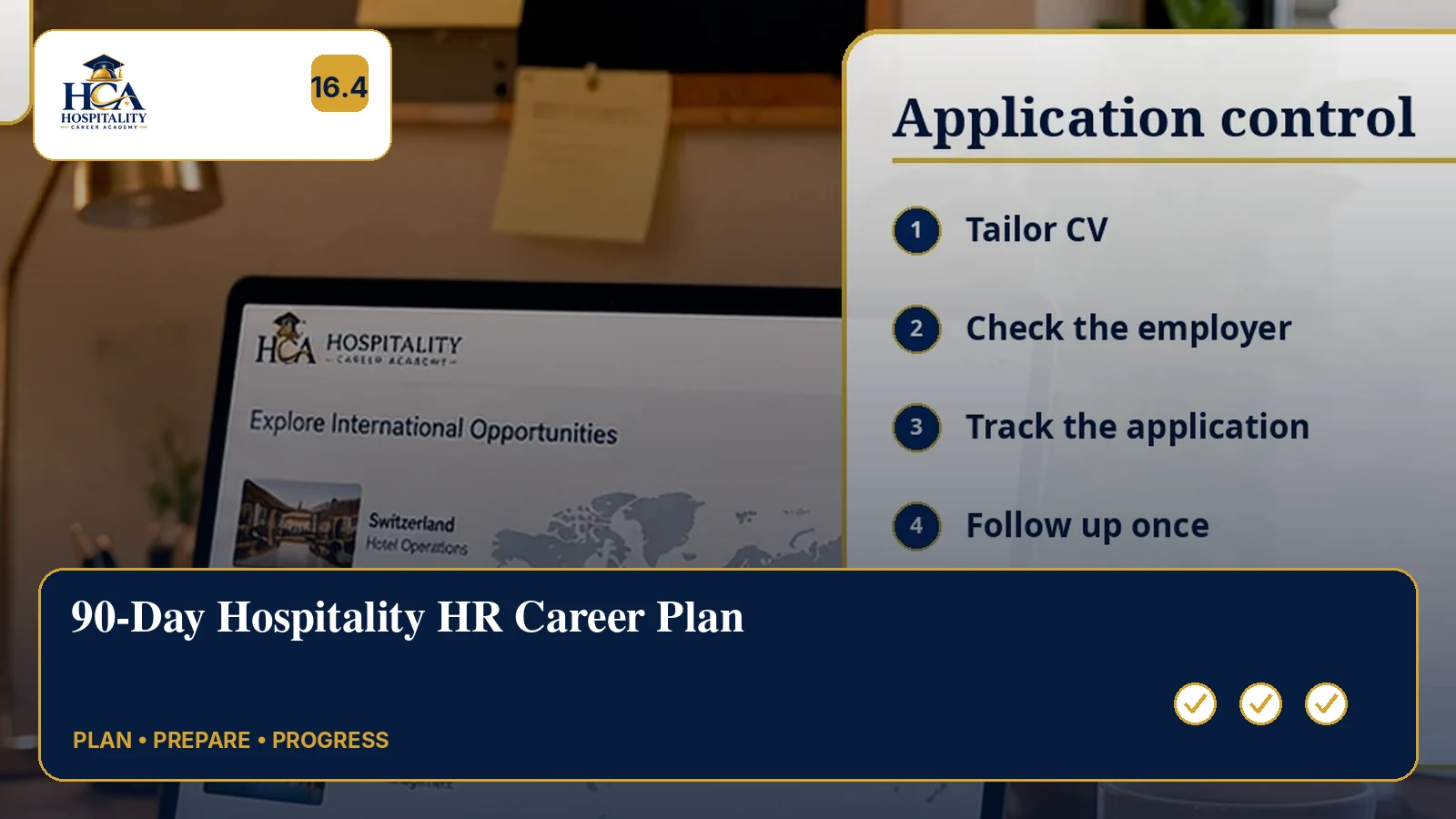
You are becoming ready for an entry-level hospitality HR role when you can honestly say:
- I understand the basic employee lifecycle.
- I can write clear, professional messages.
- I check data and documents carefully.
- I know why confidentiality and access control matter.
- I can organise tasks, owners and deadlines.
- I understand the main hotel departments.
- I know when to ask, verify or escalate.
- I can show practical evidence without exposing real employee information.
Final takeaway
Starting an HR career in hospitality is less about finding a magic certificate and more about building trust through accurate work. Learn the employee lifecycle, understand hotel operations, protect private information and show that you can coordinate people and deadlines calmly.
Your first role may be administrative, but it is not unimportant. Every accurate record, clear orientation and properly closed action contributes to the employee experience—and the employee experience ultimately affects the guest experience. Start with disciplined basics, gather evidence and use the next 90 days to become visibly ready.
Related HCA guides
Update references
- HCA original article — Hospitality Career Academy
- Careers in the people profession — CIPD
- Human Resources Specialists — U.S. Bureau of Labor Statistics
- HCA Academy — Hospitality Career Academy
Frequently asked question
Can I move into hotel HR without previous HR experience?
Yes, especially in entry-level coordination, recruitment or learning-support roles, when you can demonstrate confidentiality, organisation, communication, accurate records and relevant hospitality experience. Requirements still vary by employer and country.
Build your hospitality career with HCA