A hotel housekeeping checklist should do more than tell an employee to “clean the room.” It should define what must be checked, which standard applies, who owns the result and when a supervisor must be involved. A useful checklist protects quality, privacy, safety and communication between housekeeping, front office and engineering.
The checklist must also match the room status. A departure room, an occupied room and a vacant-clean room are not serviced in the same way. Linen replacement, guest-property handling, amenities and inspection requirements should follow the hotel’s approved policy—not a generic rule applied to every room.
This practical guide is designed for room attendants, public-area attendants, supervisors, trainers and hotel managers. It can be adapted to the property’s SOPs, room categories, sustainability commitments and local safety requirements.
Before the shift: preparation checklist
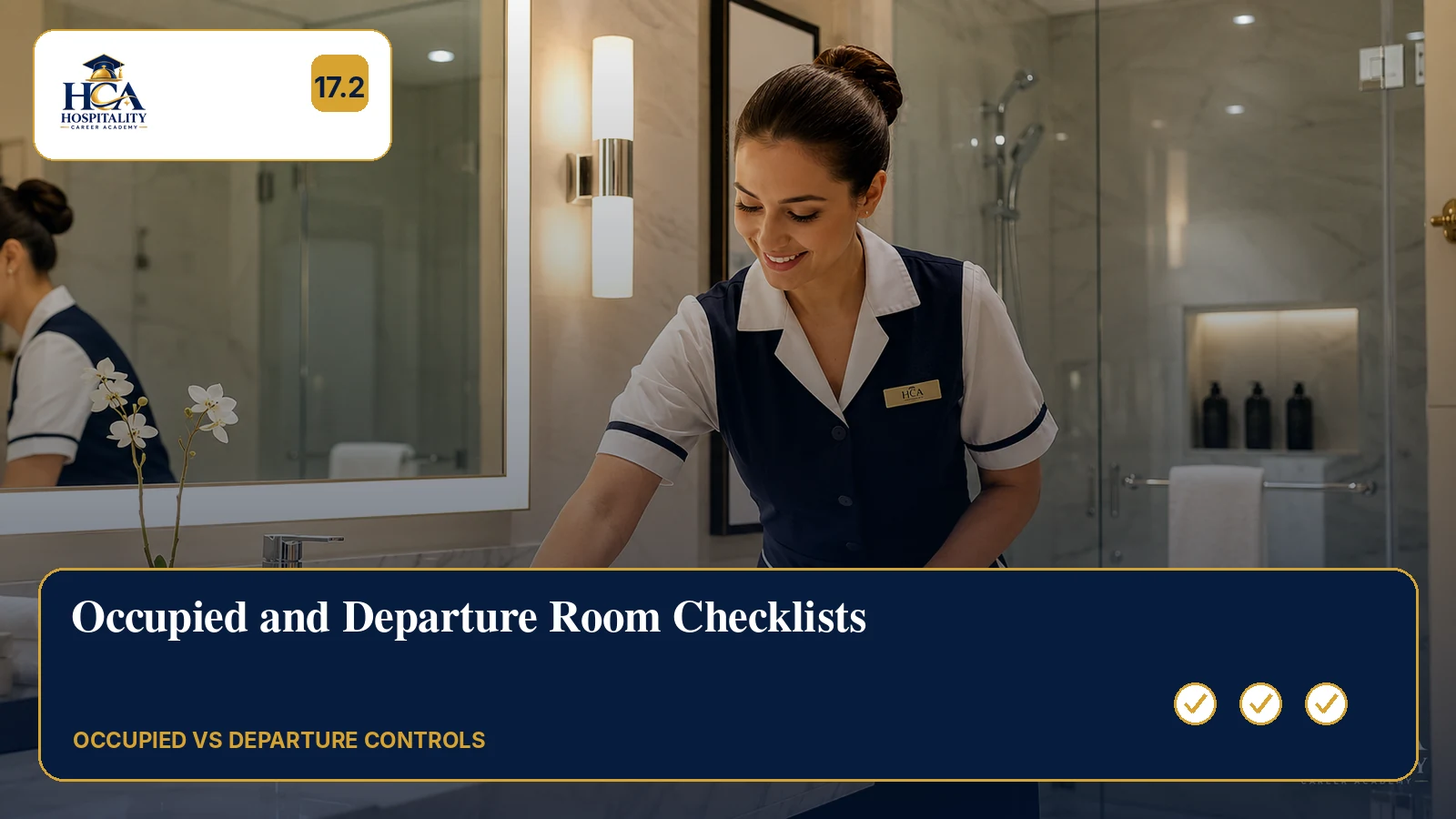
A reliable shift begins before the first room is opened. The attendant should confirm the assignment, prepare the trolley and identify any operational risks.
Personal readiness
- Uniform is clean, complete and correctly fitted.
- Name badge and required identification are present.
- Hair, hands, nails and personal hygiene meet the property standard.
- Shoes are closed, safe and suitable for the task.
- Personal phone and valuables are stored according to policy.
- Required PPE is available.
Briefing and assignment
- Review occupied, departure, vacant-clean, out-of-order and priority rooms.
- Note VIP, accessibility, family or other approved service arrangements without discussing private details unnecessarily.
- Confirm early arrivals, late departures and rooms needed urgently by front office.
- Review DND rooms, refused service and open maintenance cases.
- Confirm linen, amenity or stock constraints.
- Understand the escalation route for security, privacy, safety and guest concerns.
Trolley and equipment
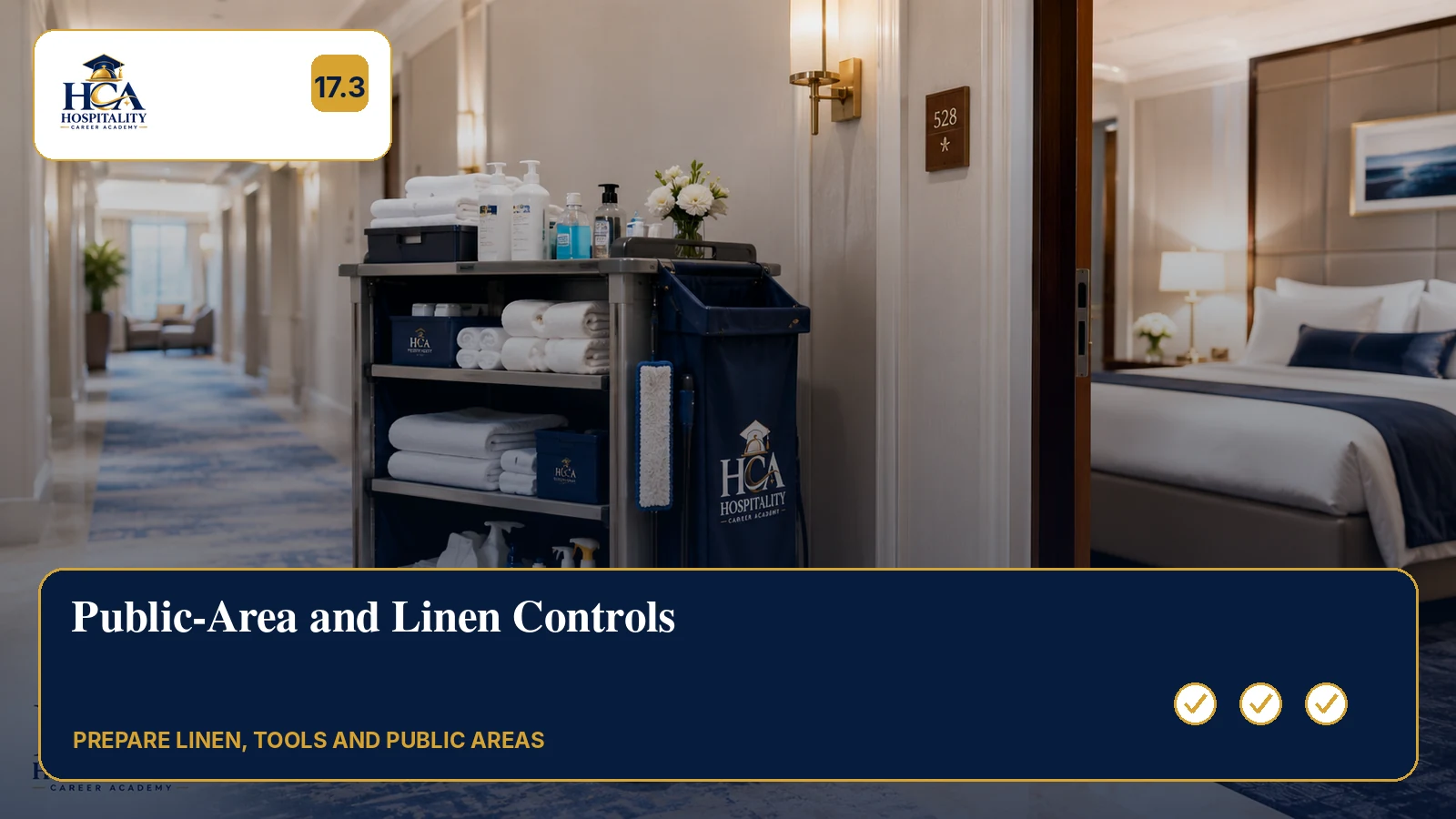
- Stock only the approved par level for the shift or floor.
- Separate clean linen, guest supplies, chemicals and waste-handling items.
- Check that bottles are labelled and closed.
- Never place chemicals in drink containers or unlabelled bottles.
- Confirm equipment is clean, safe and working.
- Keep keys or access devices secure and under personal control.
- Position the trolley without blocking guest corridors, fire doors or emergency access.
Room-entry checklist
Room entry is a privacy and security procedure. Employees must follow the property’s approved sequence.
- Verify the room number, assignment and current status.
- Check for a Do Not Disturb indicator or other access restriction.
- Park the trolley safely near the room without exposing keys or guest information.
- Knock and announce the department clearly.
- Wait the required interval and repeat according to SOP.
- If a guest answers, greet them and confirm whether service is convenient.
- Enter only when authorised and safe.
- Keep the door managed according to security policy while servicing the room.
- Never announce the guest’s name, room number or private details in the corridor.
If anything appears unusual—an unresponsive guest, suspected security issue, hazardous item, medical concern or evidence of forced entry—stop and follow the escalation procedure. Do not investigate beyond your role.
Occupied-room service checklist
An occupied room contains the guest’s belongings and requires greater care. The purpose is to refresh the room while protecting privacy and following the guest’s stated preferences.
Initial assessment
- Greet the guest if present and confirm what service is wanted.
- Note any request to return later or provide only selected items.
- Do not move, open or organise personal belongings unless the approved service specifically requires it and permission is clear.
- Report valuables or unusual items only according to policy; do not photograph or discuss them.
- Open curtains or adjust lighting only as permitted by the service standard.
Bedroom and living area
- Remove waste from designated bins without inspecting contents unnecessarily.
- Replace or refresh linen according to the property policy, stay pattern and guest request.
- Make the bed without placing guest clothing or belongings on the floor.
- Dust and clean accessible surfaces using the correct cloth and product.
- Sanitise approved high-touch points.
- Replace used glassware or cups according to the hotel procedure.
- Replenish amenities to the occupied-room standard; avoid overstocking.
- Vacuum or mop the accessible floor area safely.
- Return moved hotel items to the approved position.
Bathroom
- Use the correct colour-coded tools if the property has a colour-coding system.
- Clean and disinfect the toilet, basin, taps, shower or bath according to SOP.
- Remove hair, marks, residue and water spots.
- Replace towels based on property policy and the guest’s choice where applicable.
- Replenish toiletries accurately.
- Check drainage, water pressure, leakage, odour and fixture condition.
- Leave the bathroom dry, safe and visually ordered.
Completion
- Confirm requested items have been delivered.
- Check temperature, lighting and curtains only within the property standard.
- Ensure no tools, cloths, chemicals or waste remain.
- Close and secure the room according to procedure.
- Update room status and record any request, defect or follow-up accurately.
Departure-room cleaning checklist
A departure room requires a complete reset for the next guest. It also requires careful lost-and-found and maintenance controls.
Entry and strip-out
- Confirm the room is released for cleaning.
- Scan the room before moving anything.
- Check approved locations for guest property: drawers, wardrobes, safe area, bathroom, bed, seating and charging points.
- Follow the lost-and-found procedure immediately for any item discovered.
- Remove used linen without placing it on clean surfaces.
- Separate damaged or heavily stained linen according to policy.
- Remove waste safely and report sharps, hazardous items or unusual materials.
- Collect used room-service items through the approved process.
Clean from high to low and clean to dirty
- Ventilate the room if appropriate and permitted.
- Dust high points, vents, frames and fittings within the assigned routine.
- Clean furniture, desks, telephones, switches, handles and remote controls.
- Clean mirrors and glass without streaks.
- Inspect the mattress, protector, bed base and headboard for condition.
- Make the bed using clean linen and the approved presentation.
- Clean and disinfect the bathroom completely.
- Replenish all guest supplies to the room-type standard.
- Check minibar or refreshment items only if assigned and trained.
- Vacuum carpet edges and under accessible furniture; mop hard flooring safely.
- Check balcony or terrace areas where applicable and safe.
Functional check
- Test lights and visible controls according to procedure.
- Check television, telephone, curtains, safe, air-conditioning and other assigned items.
- Look for leaks, blocked drains, damaged furniture, loose fittings, stains, pests or unusual odours.
- Report defects immediately with the correct room number, location, description and priority.
- Do not mark a room ready if a defect affects safety, security, cleanliness, essential function or the promised room product.
Final presentation
Stand at the entrance and inspect the room as the next guest will see it.
- Bed, cushions, curtains and furniture are aligned.
- Amenities are complete and consistently placed.
- Surfaces are clean, dry and free from hair, dust and marks.
- Air and temperature are acceptable.
- No trolley item or personal item remains.
- The room smells neutral and fresh, not heavily fragranced.
- The room status is updated only after all required checks are complete.
Vacant-clean room recheck checklist
A room may have been cleaned earlier but still needs checking before arrival, especially after maintenance access or a long vacant period.
- Confirm no one entered without the status being updated.
- Check dust, odour, temperature and ventilation.
- Confirm bathroom and plumbing remain dry and functional.
- Recheck lighting, curtains, safe and visible equipment.
- Verify amenities, towels, linen and welcome arrangements.
- Confirm approved maintenance work is complete and the room is clean afterward.
- Record the recheck and release the room according to property procedure.
DND, refused service and no-access checklist
Do Not Disturb and refused service must be handled consistently. Employees should never ignore the room indefinitely or enter without the required authority.
- Record the DND or refusal accurately with time.
- Do not knock repeatedly or discuss the room publicly.
- Follow the property’s welfare, security and maximum-time procedure.
- Notify the supervisor when the defined threshold or risk condition is reached.
- Record any guest contact and agreed service arrangement.
- Deliver requested items without exposing the room number or guest identity.
- Never use an emergency or master access procedure merely to complete routine cleaning.
The exact escalation timing should be set by the hotel’s safety and security policy.
Public-area housekeeping checklist
Public areas shape the guest’s first impression and require regular inspection rather than one cleaning per day.
Lobby and reception area
- Entrance glass, doors and handles are clean.
- Floors are dry, safe and free from debris.
- Furniture is aligned and free from visible dust or stains.
- Bins are clean and not overflowing.
- Public restrooms are checked at the assigned frequency.
- Flowers, displays and guest materials are neat.
- Spills and trip hazards are controlled immediately.
Corridors and lifts
- Carpets, skirting, walls and corners are free from visible soil.
- Lift panels, buttons and mirrors are clean.
- Trolleys, linen bags and equipment do not obstruct routes.
- Emergency exits and fire equipment remain accessible.
- Noise and staff conversations are controlled.
- Lighting or maintenance defects are reported.
Public restrooms
- Use the required warning sign while cleaning.
- Toilets, urinals, basins, taps and mirrors are cleaned and disinfected.
- Soap, tissue and hand-drying supplies are replenished.
- Floors are dry and odour is controlled.
- Waste is removed safely.
- Fixtures, leaks and blockages are reported.
- The completed check is recorded truthfully, not pre-signed.
Linen, chemical and equipment controls
Linen
- Keep clean and soiled linen physically separated.
- Do not place clean linen on the floor or an unclean surface.
- Record damaged, stained or missing items as required.
- Follow approved handling for contaminated linen.
- Do not overfill linen bags or lift them unsafely.
Chemicals
- Use only approved, labelled products.
- Follow dilution and contact-time instructions.
- Never mix products unless the manufacturer and property procedure specifically permit it.
- Wear required PPE.
- Store chemicals securely and away from guest supplies.
- Report spills, exposure or damaged containers immediately.
Equipment
- Inspect cables, plugs, wheels, handles and attachments before use.
- Remove unsafe equipment from service and label or report it.
- Use the correct equipment for the surface.
- Clean and store equipment after use.
- Do not leave running or powered equipment unattended in guest routes.
Lost-and-found checklist
- Stop and leave the item where it is unless movement is needed for safety.
- Inform the supervisor through the approved channel.
- Record room or location, date, time, item description and finder.
- Use two-person verification if required by policy.
- Place the item in the approved bag or container and seal or label it.
- Transfer it to the designated secure location.
- Never contact the guest privately, keep the item, photograph it for personal use or discuss it with others.
High-value, identity, medication, dangerous or sensitive items may require special escalation.
Maintenance and defect-reporting checklist
A useful defect report is specific enough for engineering and front office to act.
Include:
- exact room or public-area location;
- item or equipment affected;
- clear description of the symptom;
- whether the issue is active or intermittent;
- guest impact;
- immediate safety action taken;
- priority according to property rules;
- reporter and time;
- follow-up or completion status.
Weak report:
Bathroom broken.
Useful report:
Room 524: water is leaking continuously from the basin waste pipe into the vanity cabinet. Floor is currently dry. Room placed on hold and supervisor informed at 14:10.
Supervisor inspection and sign-off checklist
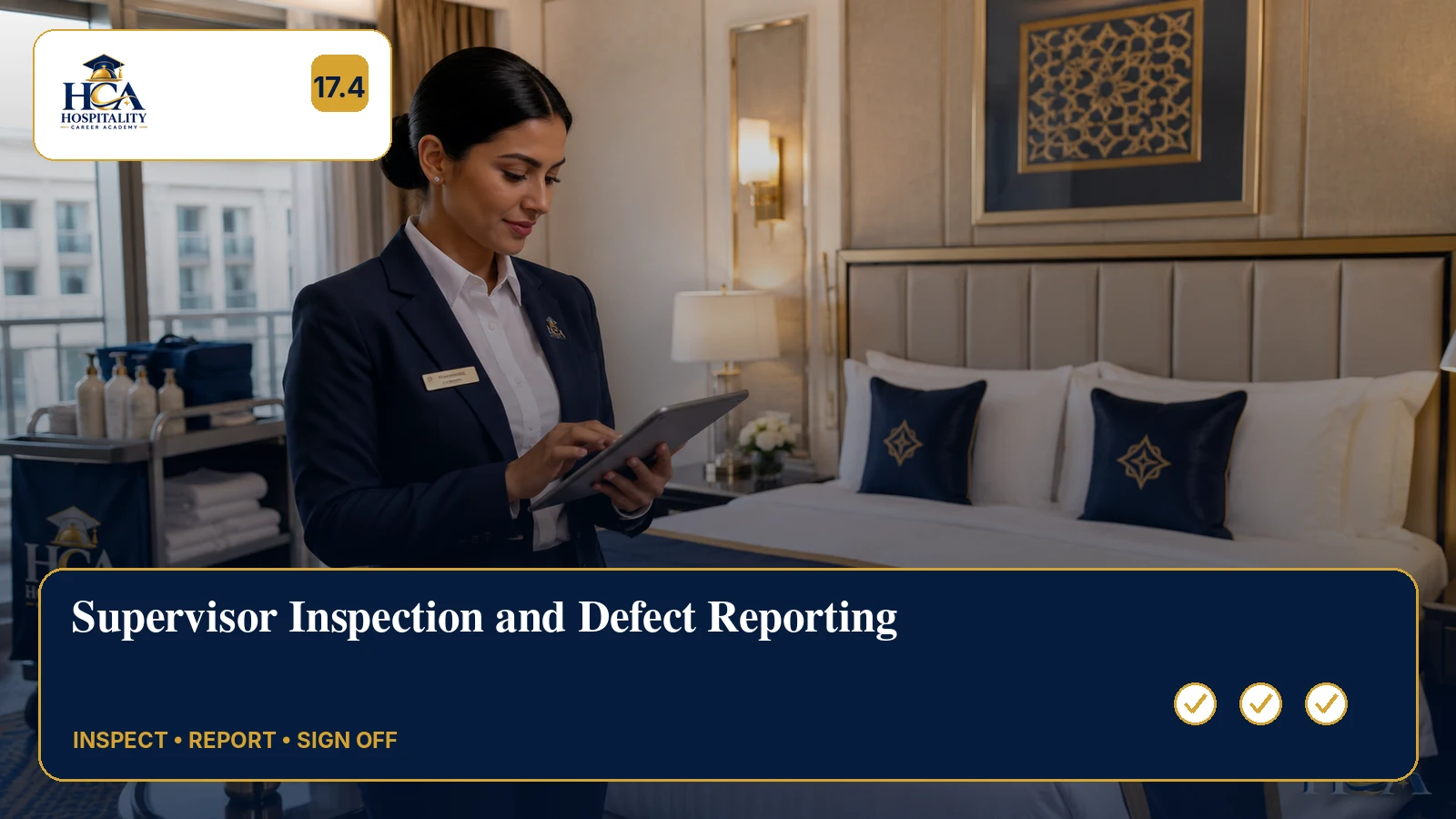
The supervisor should not repeat every cleaning task. The purpose is to verify high-risk and high-impact standards, coach the employee and release the room responsibly.
Inspect
- room status matches the assignment;
- entrance and first visual impression;
- bed presentation and linen condition;
- bathroom sanitation and dryness;
- high-touch and commonly missed points;
- amenities and room-type setup;
- odour and air condition;
- safety, security and maintenance issues;
- guest-property or lost-and-found compliance;
- room status and documentation accuracy.
Coach
Feedback should identify the exact standard and the required correction.
Instead of:
This room is not good.
Use:
The room is nearly ready. Please remove the marks from the lower mirror edge, replace the stained face towel and report the loose bedside socket before we release it.
Sign off
- Confirm all critical corrections are complete.
- Do not release a room with unresolved safety, security or cleanliness failures.
- Record the inspector, time and result.
- Identify recurring gaps for coaching or training.
- Escalate system or resource problems rather than repeatedly blaming the attendant.
Compact shift checklist
| Stage | Required control |
|---|---|
| Start of shift | Assignment, priority rooms, stock, keys, PPE and open issues reviewed |
| Before entry | Status and DND checked; knock-and-announce sequence followed |
| During service | Correct room-status checklist, safe chemicals, privacy and belongings protected |
| Before leaving | Self-inspection, amenities, defects, tools and security checked |
| System update | Room status, requests, lost and found, and maintenance recorded accurately |
| Supervisor check | Critical quality, safety and readiness standards verified |
| End of shift | Keys returned, trolley cleaned, stock reconciled and open actions handed over |
Common checklist mistakes
Avoid these common problems:
- using one checklist for every room status;
- replacing linen or supplies automatically without property policy or guest choice;
- pre-ticking tasks before they are completed;
- measuring speed while ignoring quality and safety;
- allowing unlabelled chemicals on the trolley;
- treating DND as permission to enter after an arbitrary time;
- moving or discussing guest belongings unnecessarily;
- releasing rooms before maintenance or inspection is complete;
- recording vague defects;
- using the checklist as punishment instead of a control and coaching tool.
Final takeaway
A strong hotel housekeeping checklist creates a common operational language. It tells attendants what to prepare, how to protect the guest, which standard applies to each room status, what must be reported and how a supervisor confirms readiness.
The checklist should never replace judgement or the property’s approved SOP. It should make the SOP easier to apply during a busy shift. When room status, privacy, safety, cleaning, defect reporting and sign-off are connected, housekeeping can deliver rooms and public areas that are not only clean, but genuinely ready for the guest.
Related HCA guides
Update references
- HCA original article — Hospitality Career Academy
- Professional Housekeeping course — Hospitality Career Academy
- Hazard Communication — U.S. Occupational Safety and Health Administration
- ISO 22483:2020 Tourism and related services — Hotels — International Organization for Standardization
Frequently asked question
Should occupied and departure rooms use the same housekeeping checklist?
No. They share hygiene and safety controls, but occupied-room service requires stronger guest-belongings and privacy controls, while departure cleaning includes a complete reset, inventory check and sale-readiness inspection.
Study professional housekeeping operations