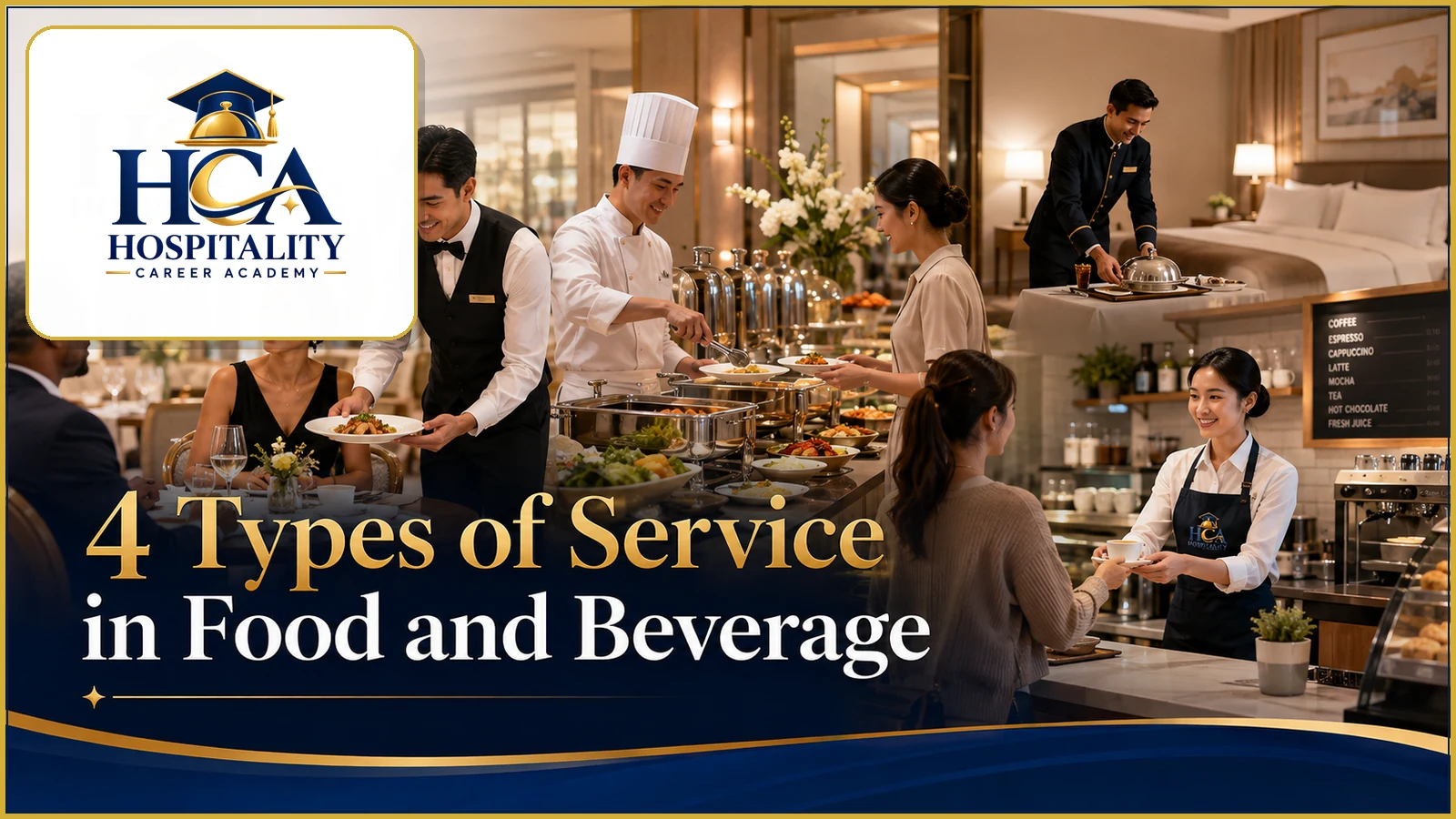
Food and beverage service is not one single skill. The way service is delivered changes according to the concept, guest expectation, speed requirement and level of formality. A luxury restaurant, a hotel breakfast buffet, a casual café and an in-room dining operation all serve food and drinks, but they do not use the same workflow.
For hospitality professionals, understanding service types is important because each style requires different preparation, communication and service behaviour. This guide explains four of the most common service types used in hospitality operations.
1. Table service
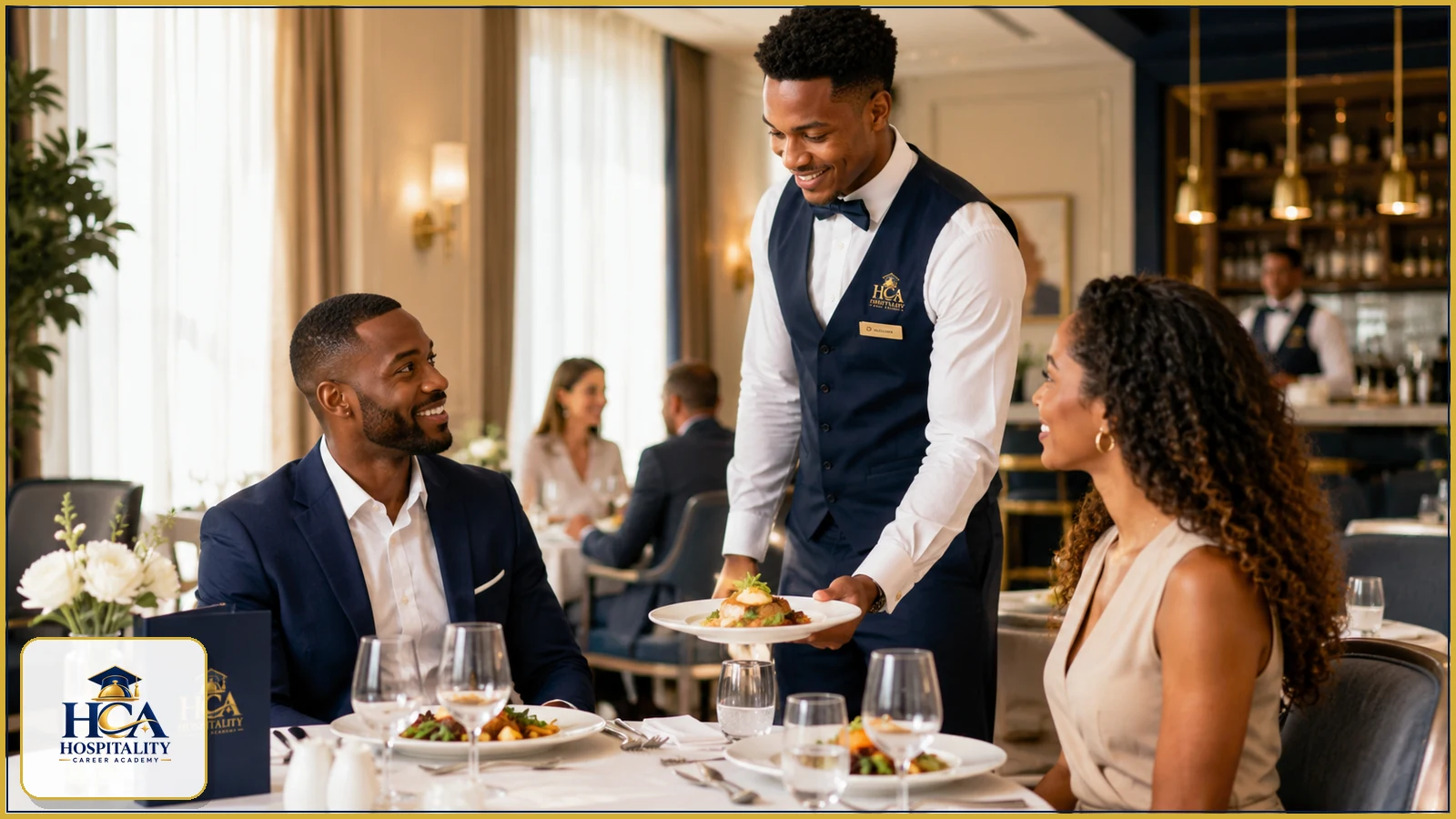
Table service is the most traditional and widely recognised restaurant service style. In this model, the guest is seated, the order is taken at the table and food and beverages are served directly by the service team.
Where it is commonly used
- à la carte restaurants
- hotel all-day dining outlets
- fine dining restaurants
- lounges and some pool or terrace outlets
Key service responsibilities
- greeting and seating the guest
- presenting menus and explaining items
- taking food and beverage orders accurately
- communicating clearly with the kitchen or bar
- serving in the correct sequence
- checking guest satisfaction during the meal
- presenting the bill and completing farewell properly
Skills required
Table service demands menu knowledge, good communication, sequence of service awareness, tray handling, service etiquette and attention to detail. In higher-end operations, it may also require knowledge of wine service, allergen awareness and upselling.
2. Buffet service
In buffet service, food is displayed for self-selection by the guest, while service staff support the overall experience. This format is common when the operation needs variety, faster guest movement or the ability to serve many covers at once.
Where it is commonly used
- hotel breakfast service
- conference and banquet meals
- all-day dining buffets
- themed lunch or dinner events
Key service responsibilities
Even when guests serve themselves, the team remains essential. Responsibilities include:
- setting the buffet attractively and hygienically
- replenishing food on time
- monitoring food temperature and presentation
- clearing tables promptly
- assisting guests with beverages or special requests
- maintaining cleanliness around buffet stations
- helping with guest flow and queue control
Skills required
Buffet service requires speed, awareness, station monitoring, hygiene discipline and the ability to manage volume efficiently. Team members should understand portion appearance, refill timing and communication with the kitchen.
3. Room service or in-room dining
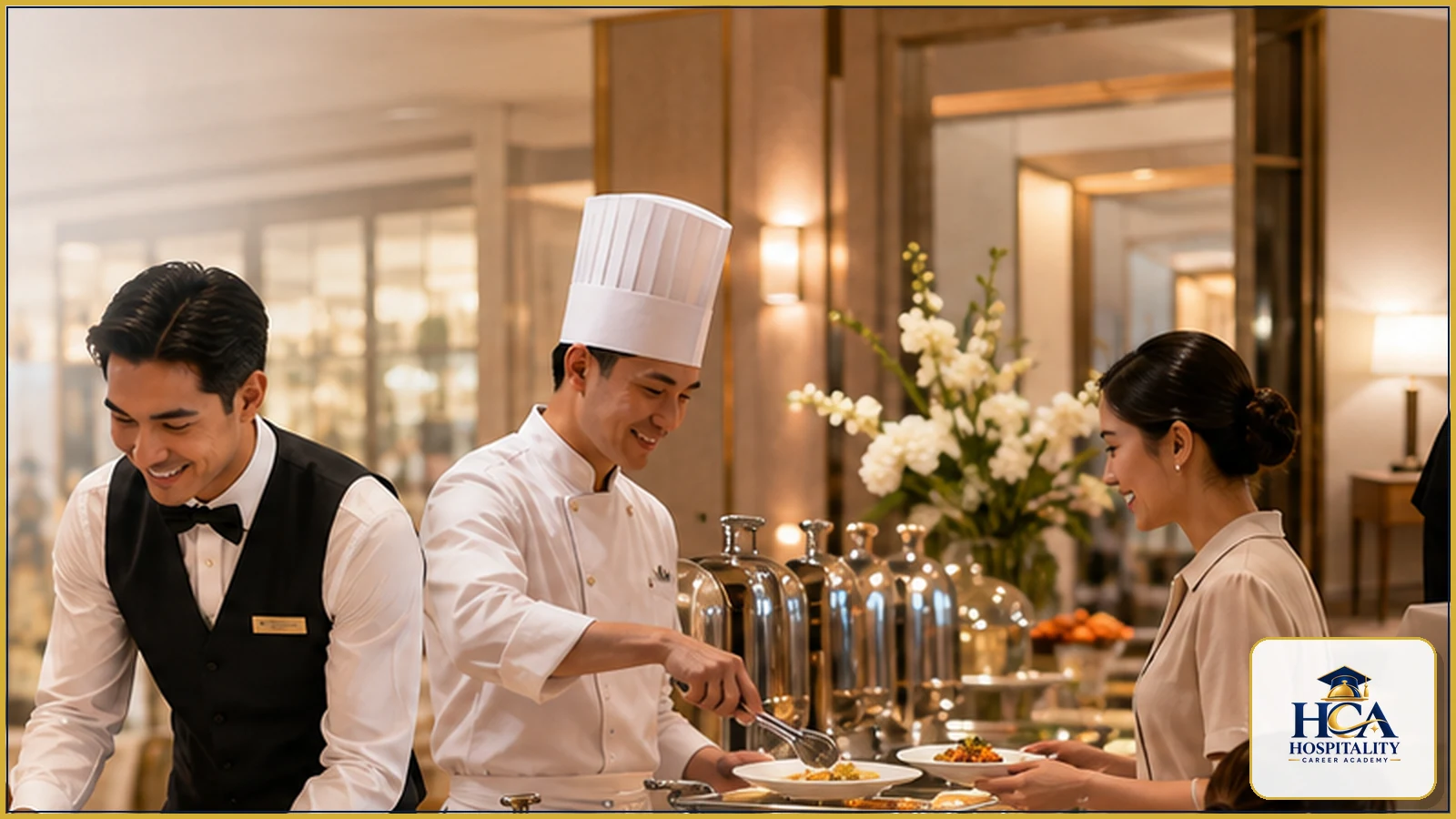
Room service is a more private, guest-focused form of service delivered directly to the guest room. It combines elements of restaurant service with coordination, timing and privacy awareness.
Where it is commonly used
- hotels and resorts
- serviced apartments
- luxury residences with hotel-style service
Key service responsibilities
- receiving and confirming orders accurately
- understanding delivery times and room details
- preparing trays, trolleys and condiments correctly
- delivering in a professional and discreet way
- setting the meal in the room if the standard requires it
- explaining the order briefly and politely
- collecting used trays later according to procedure
Skills required
In-room dining staff need strong telephone etiquette, order accuracy, room-entry etiquette, grooming, product knowledge and privacy awareness. Timing is especially important because delays are more visible in room service than in a restaurant.
4. Counter service or quick service
Counter service is common in cafés, takeaway outlets and faster-paced casual operations. In this model, the guest usually orders and pays at a counter, and the product is served immediately or collected shortly after.
Where it is commonly used
- coffee shops and cafés
- bakery counters
- takeaway concepts
- food courts
- some casual hotel grab-and-go outlets
Key service responsibilities
- greeting guests quickly and clearly
- explaining products or promotions
- taking the order accurately
- processing payment efficiently
- preparing or coordinating collection of the order
- keeping the service area clean and stocked
- managing queues in a calm and friendly way
Skills required
Quick service needs speed, product knowledge, POS accuracy, suggestive selling and strong communication. Because guest interaction is short, the first impression matters even more.
How to choose the right service style for the operation
Managers choose a service style based on guest expectations, concept, labour model, pricing and service speed. For example:
- A fine dining venue typically uses table service because the guest expects personal attention.
- A busy breakfast outlet often uses buffet service to handle higher volume efficiently.
- A guest staying in a hotel room expects room service to be discreet, accurate and timely.
- A café benefits from counter service because speed and convenience are central to the concept.
Understanding this difference helps hospitality employees adapt their behaviour instead of giving the same style of service in every environment.
Common mistakes across service types
New service team members often make similar mistakes regardless of the outlet. These include:
- weak product knowledge
- poor order accuracy
- not understanding service sequence
- slow clearing or poor station organisation
- weak communication with kitchen or bar
- limited attention to guest cues
Training should therefore focus on both universal skills and outlet-specific service standards.
Final takeaway
The four common food and beverage service types—table service, buffet service, room service and counter service—each require different methods, timing and guest interaction. Hospitality professionals who understand these differences can move more confidently between restaurants, cafés, hotels and event operations.
Good service is not only about carrying plates. It is about matching the right service style to the guest experience the business promises.
Related HCA guides
Frequently asked question
What are the main types of food and beverage service?
The most common core service types are table service, buffet service, room service and counter or quick service. Each requires different workflow, guest interaction and setup standards.