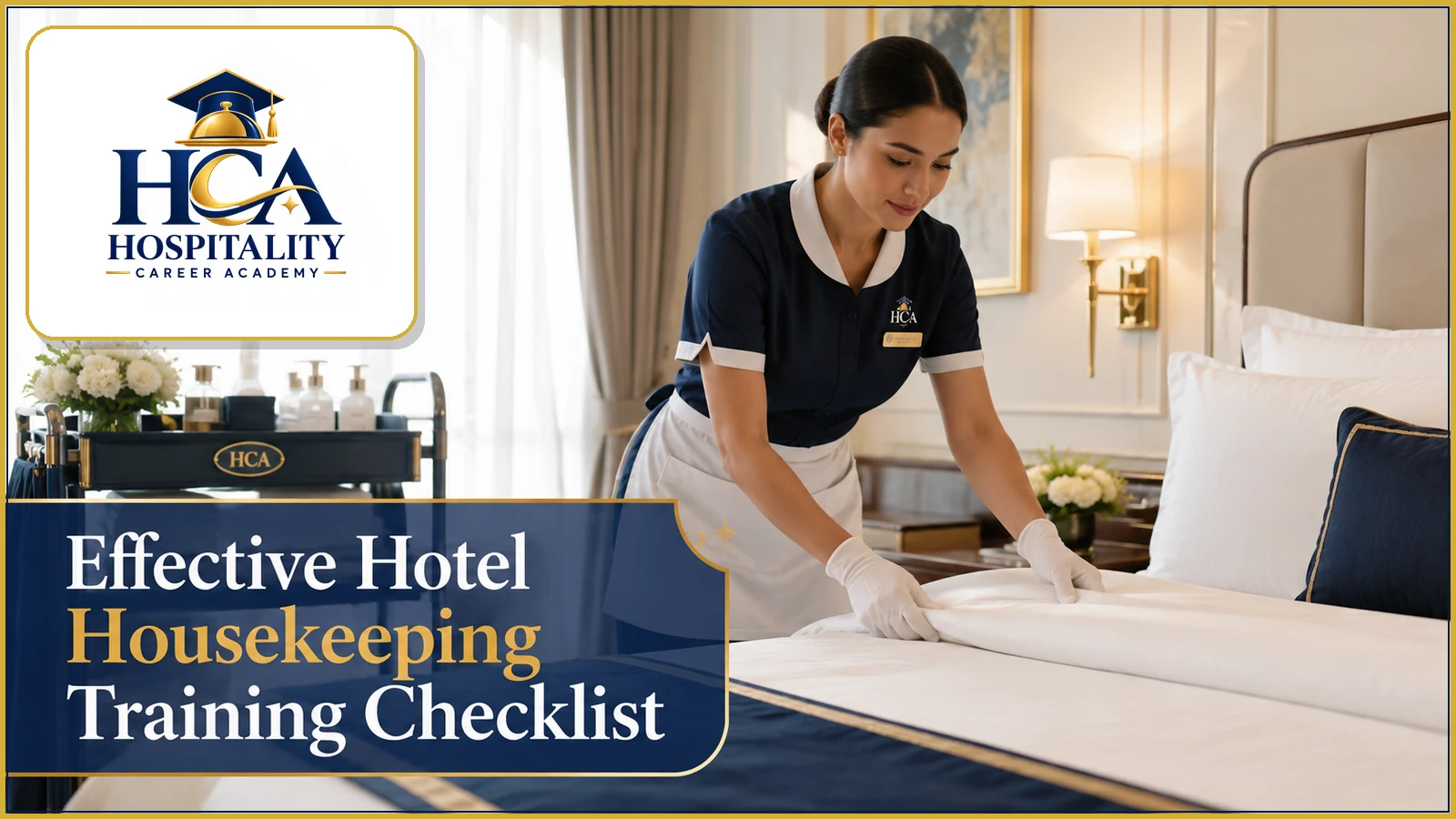
Housekeeping shapes the guest’s impression of cleanliness, safety, comfort and hotel quality. Even a beautiful property can lose trust quickly if guest rooms are not prepared to a consistent standard. For this reason, housekeeping training should never be reduced to “clean the room faster.” Effective training must cover service attitude, hygiene, sequencing, chemical safety, defect reporting and quality inspection.
This checklist is designed for hotels, serviced apartments and training centres that need a practical structure for onboarding new room attendants and refreshing existing team members.
1. Start with grooming, hygiene and professional behaviour
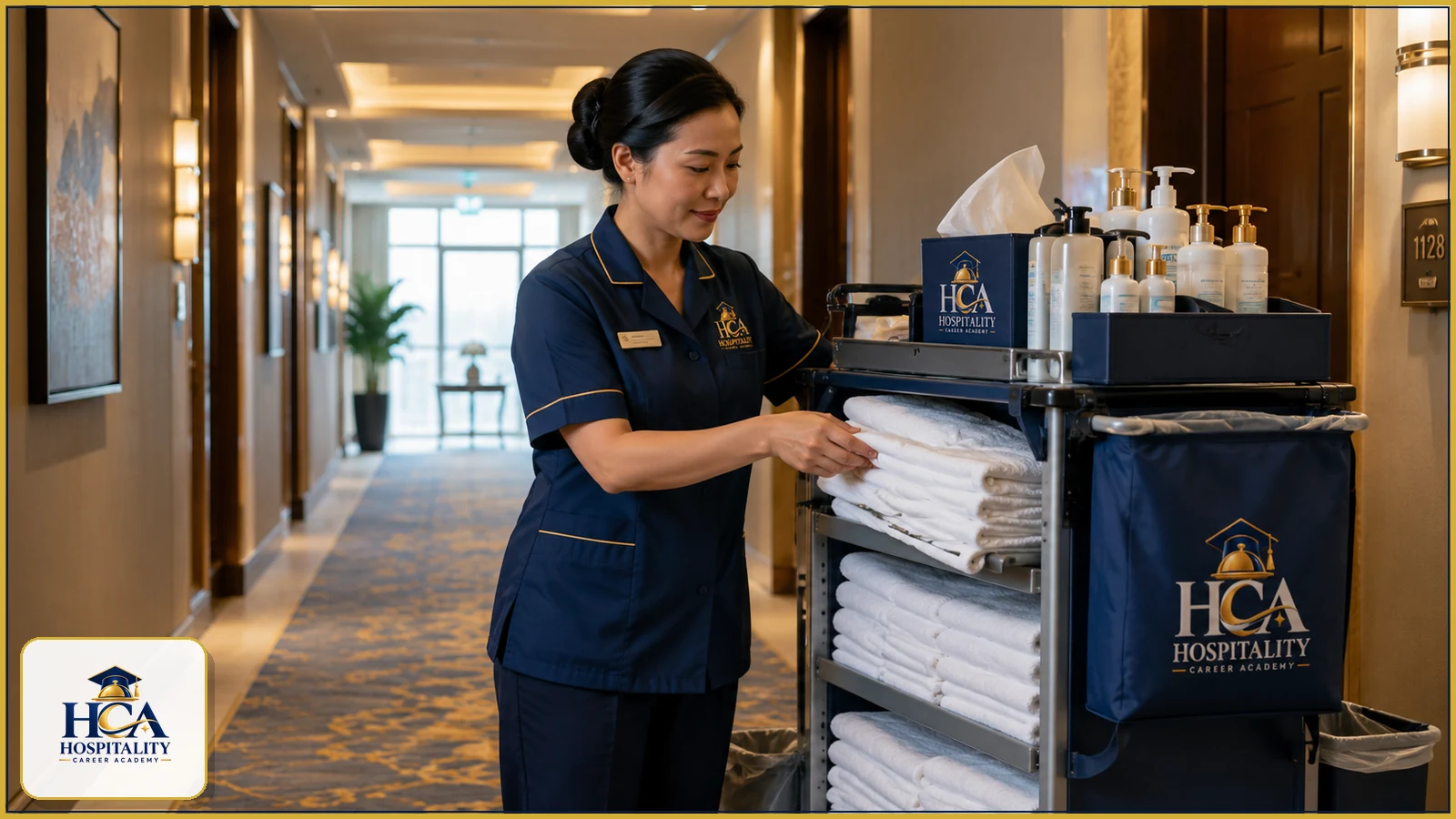
Before a team member cleans a room, they must understand how to present themselves. Guests notice housekeeping employees in corridors, lifts and sometimes inside guest rooms. Good grooming supports trust.
A housekeeping training checklist should begin with:
- correct uniform and name badge
- personal hygiene and clean hands
- minimal jewellery and safe footwear
- neat hair and professional appearance
- polite greeting and professional body language
- understanding privacy and confidentiality
Employees should also know what not to do: do not argue in guest areas, do not use guest items, do not discuss guest information and do not leave equipment unattended where it creates risk.
2. Train the room-entry procedure properly
Entering a guest room is a service and security procedure, not only an operational step. Team members should practise the sequence until it becomes natural.
A standard room-entry checklist may include:
- Check room status and assignment.
- Position trolley neatly without blocking the corridor.
- Knock and announce housekeeping clearly.
- Wait, then repeat according to SOP.
- Enter only when it is safe and appropriate.
- Use door stopper if required by policy.
- Open curtains and assess the room.
- Separate linen, trash and guest belongings carefully.
Special attention must be given to DND rooms, occupied rooms, sleep-out indicators and guest belongings. Privacy rules should be explained clearly during training.
3. Cover the full guest-room cleaning sequence
Training should not rely on memory alone. New attendants need a repeatable order of work that supports quality and productivity.
A practical training sequence includes:
Bedroom and living area
- strip used linen as required
- inspect mattress, linen condition and bed base
- dust high to low
- sanitise touch points such as switches, handles and remote controls
- make the bed according to hotel standard
- clean surfaces, mirrors and furniture
- vacuum or mop floors according to surface type
- check lighting, curtains and visible maintenance defects
Bathroom
- flush and pre-treat fixtures if needed
- clean sink, counter, mirror and taps
- clean toilet thoroughly using the correct tools
- clean shower or bathtub and remove residue
- dry and polish surfaces where required
- replace towels and amenities according to room type and occupancy standard
- inspect drains, odour, leakage and water pressure issues
Final presentation
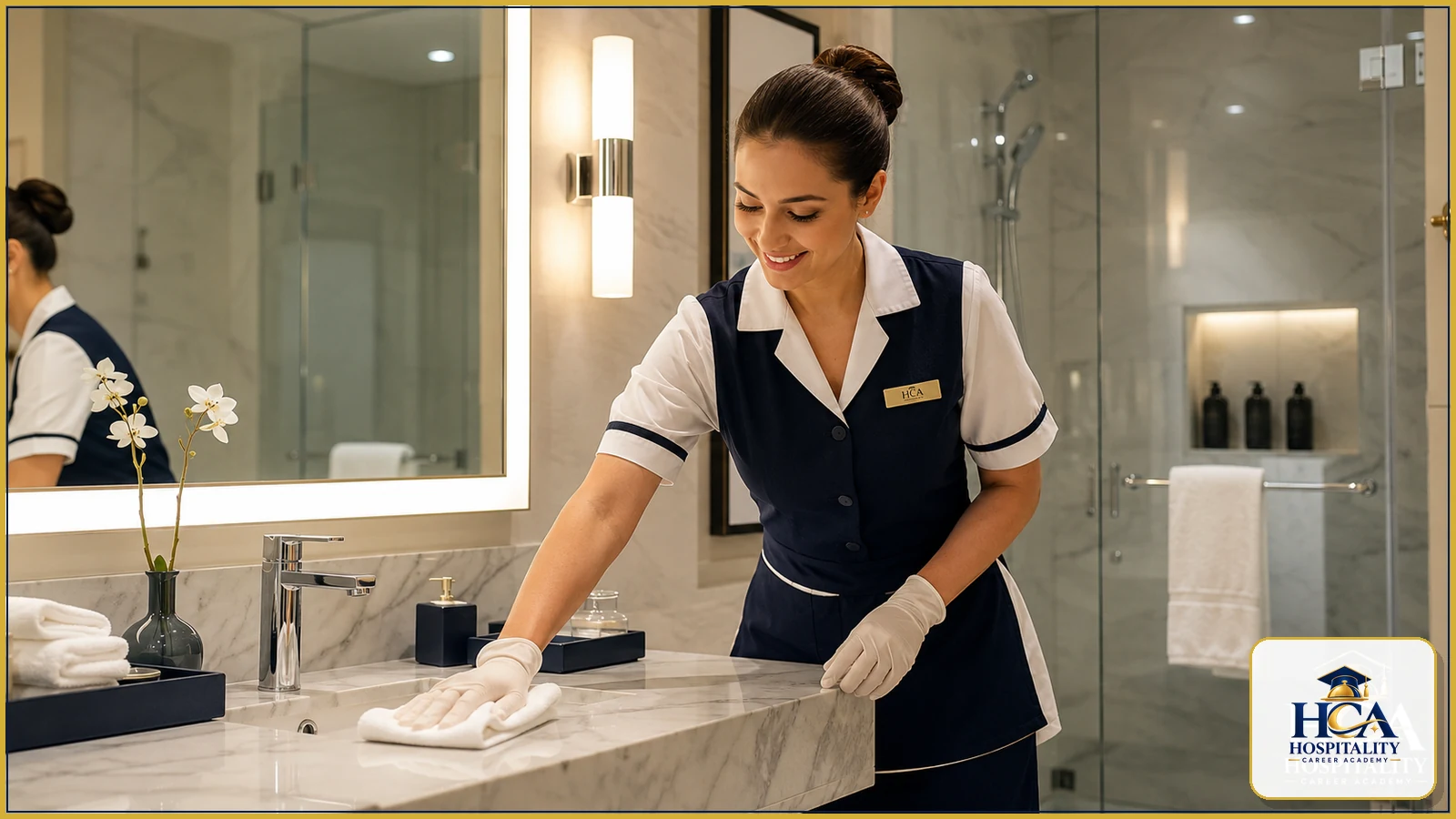
- align amenities neatly
- set temperature and lighting according to standard
- ensure no hair, dust, stains or bad odour remain
- confirm the room looks guest-ready from the doorway
4. Include chemical safety and tool handling
Housekeeping employees work with chemicals, equipment and sharps-related risks. Training must explain how to protect the employee, the guest and the hotel.
Checklist items should include:
- knowing the purpose of each approved chemical
- never mixing chemicals unless authorised by SOP
- reading labels and following dilution instructions
- using colour-coded cloths or tools if applicable
- storing chemicals safely on the trolley or in the pantry
- using PPE when required
- reporting spills, broken glass or unsafe conditions immediately
Supervisors should also teach safe manual handling, including how to lift linen bags, push loaded trolleys and reduce strain injuries.
5. Train linen, guest supplies and stock control
Housekeeping quality depends on preparation as much as cleaning. A room attendant should start the shift with the right linen, amenities and working tools.
Key checklist points:
- prepare the trolley with correct par stock
- separate clean and soiled items properly
- protect linen from contamination
- track missing, damaged or stained items
- replenish guest supplies accurately
- follow minibar or amenity procedures if assigned
- return unused stock correctly at the end of the shift
Good stock habits reduce delays, waste and repeated trips to the pantry.
6. Teach defect reporting and room status accuracy
Housekeeping is one of the departments most likely to notice defects early. Team members should be trained to identify and report issues rather than ignore them.
Typical reporting items include:
- leaking taps or shower heads
- weak air conditioning
- damaged furniture or fixtures
- blown light bulbs
- blocked drains
- missing guest-room items
- unusual odours or stains
Training should explain the difference between a room that is physically clean and a room that is genuinely ready for sale or occupancy. Accurate room status communication with front office is essential.
7. Use inspection as a coaching tool
Inspection is not only about finding faults. It is a training and coaching tool. Supervisors should use room inspections to reinforce standards, correct habits and build confidence.
A simple inspection checklist should look at:
- cleanliness and dust control
- bathroom sanitation
- bed presentation
- amenity placement
- safety and defect reporting
- productivity and timing
- guest-ready visual presentation
When giving feedback, be specific. Instead of saying “do better,” say “the mirror edge still has marks” or “the bed runner is not centred.” Specific feedback helps new attendants improve faster.
8. Reinforce guest interaction and privacy
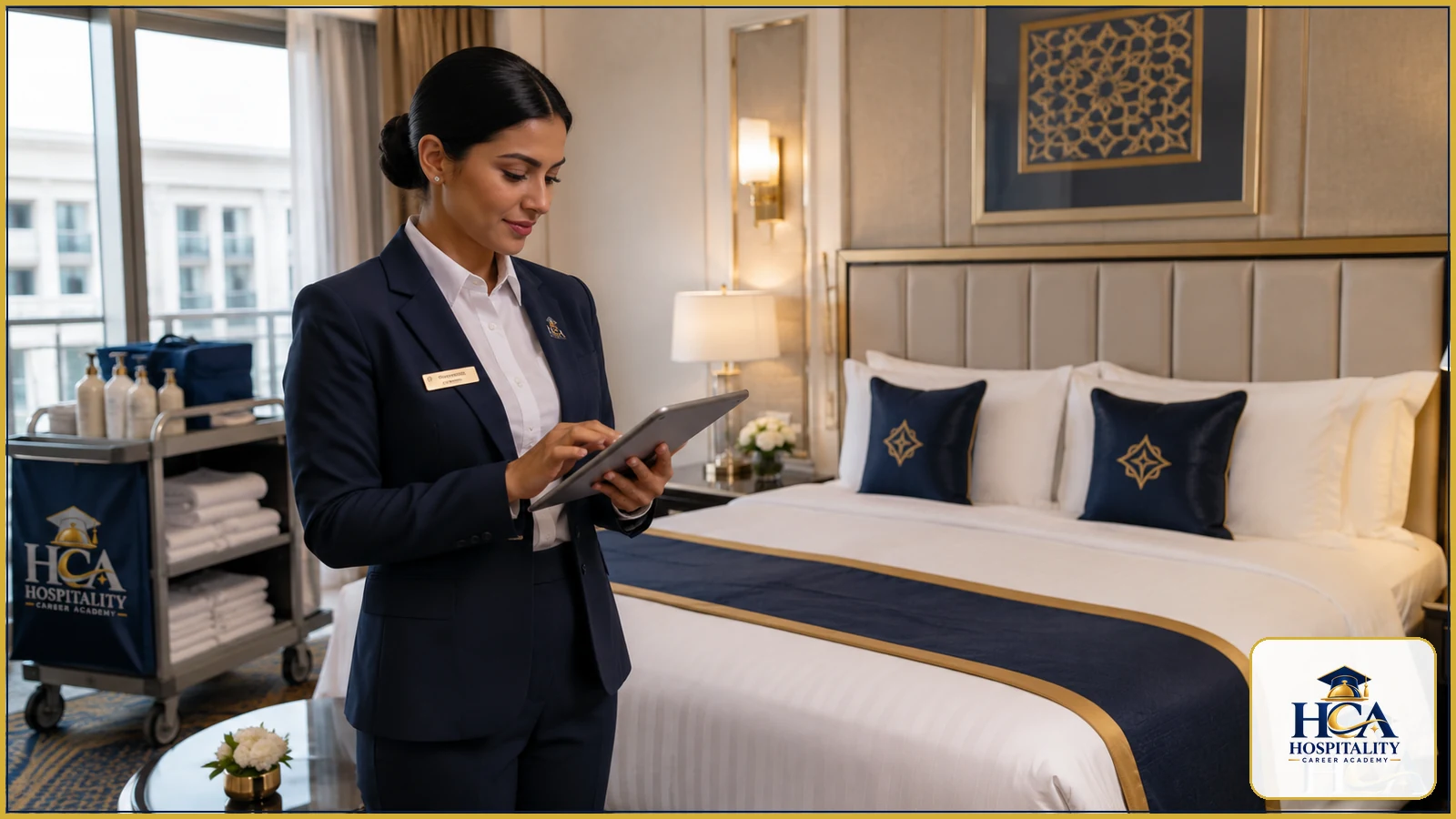
Housekeeping staff may be asked for towels, directions, laundry support or simple room assistance. Their communication matters.
Training should cover:
- polite greetings
- asking permission before re-entering an occupied room
- responding appropriately when a guest requests something outside the attendant’s role
- protecting privacy and not commenting on guest belongings
- escalating lost-and-found, suspicious items or sensitive situations immediately
Final takeaway
An effective housekeeping training checklist should build more than cleaning speed. It should develop safe habits, room standards, professional conduct and reliable communication. When training is structured, repeated and supported by inspection, room attendants become more confident and supervisors achieve more consistent results.
The strongest housekeeping teams are not only fast. They are organised, careful, safety-aware and able to present every room as guest-ready.
Related HCA guides
Frequently asked question
What should a housekeeping training checklist include?
A strong checklist should cover grooming, room-entry procedure, bed-making, bathroom cleaning, chemical safety, linen handling, reporting defects and final inspection standards.
View housekeeping learning options